

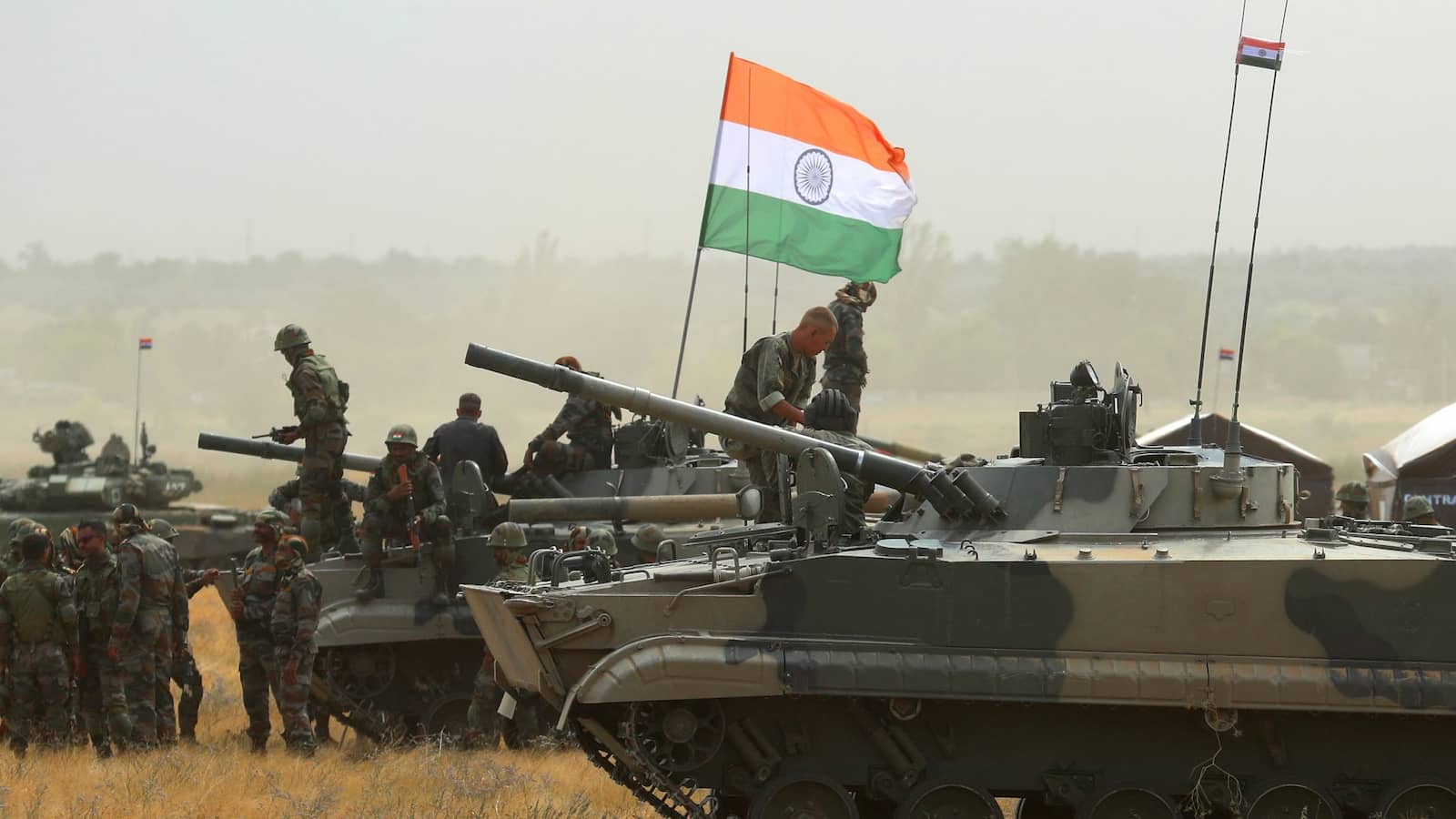
India’s Defence Export: India is moving fast toward becoming a major name in defence manufacturing and exports. Defence Minister Rajnath Singh recently shared his strong belief in the country’s growth in this field. He spoke at an event called Marathwada Atmanirbhar Bharat Ki Raksha Bhoomi, which was held in Chhatrapati Sambhajinagar and organised by the Chamber of Marathwada Industries and Agriculture.
While talking to the people there, he said India is planning to reach ₹50,000 crore in defence exports by 2030. That is a big goal, and it shows how serious the country is about being self-reliant and reducing its need to buy weapons and equipment from other countries.
The Defence Minister also said that India’s defence production will cross ₹1.60 lakh crore this year. And by 2029, the country wants to touch ₹3 lakh crore. He said India is not only trying to make sure it can protect itself better but also become a strong and trusted exporter of defence products. This idea is part of the larger Atmanirbhar Bharat dream, which wants India to be more self-dependent in every area, especially in defence. Rajnath Singh also talked about this during another event called Defence Conclave 2025 Force of the Future, organised by The Week.
He said, “India’s emergence as a developed power will go hand in hand with becoming a global military leader.” He explained how defence manufacturing is not only about weapons but also about making sure India doesn’t face any problems if something happens to the supply of equipment from other countries. In today’s world, where global tensions are rising, this becomes even more important.
India has made many changes to its defence policy to improve local production. In 2013-14, India’s defence exports were only ₹686 crore. But now in 2023-24 they crossed ₹21,000 crore which is a huge jump and the country plans to double this number by 2030.
About 75% of India’s defence modernisation money goes toward buying things made in India rightnow. This doesn’t just help save money, it also helps create new ideas and better technology inside the country. Many Indian defence start-ups are also doing great work in advanced areas like AI, cyber defence, robotics, and smart communication systems. These start-ups are growing with help from a government program called iDEX, which stands for Innovations for Defence Excellence.
Big Deals and Global Ties
India’s defence sector saw major progress in 2024. The country hit a new record in exports ₹21,083 crore which was 32.5% more than the year before. It was also 31 times more than what India exported just ten years ago. This didn’t happen by chance. The rise is thanks to good planning, reforms in how defence deals are made, and strong connections with other countries.
One big example of this international partnership is the recent agreement between India and Slovakia. President Droupadi Murmu went on an official visit, and during this trip, a deal was signed that allows JCBL Group’s Airbornics Defence and Space Private Limited to work with Slovakia on new combat vehicle technologies. India is also close to signing a very large defence deal with France, worth more than ₹63,000 crore.
Defence Stocks Rise: Paras Defence, BEL, HAL Jump Up To 10% After India-Pakistan Tensions Rise
This deal is for 26 Rafale Marine fighter jets for the Indian Navy, which includes both single- and twin-seater jets. The deal also includes training, fleet support, and even some parts being made in India. These new aircraft will improve India’s naval power, especially for INS Vikrant and in replacing older MiG-29K jets.
At the same time, India’s Defence Secretary Rajesh Kumar Singh visited the UK and Italy. In the UK, the 24th India-UK Defence Consultative Group meeting took place. Both sides agreed to work more closely on maritime security, defence technology, and industrial cooperation. India also invited UK companies to invest in Indian defence zones in states like Uttar Pradesh and Tamil Nadu.
In Italy, India took part in the 11th India-Italy Joint Defence Committee meeting. The focus there was on sharing information and working together on sea security, especially in the Red Sea and Indian Ocean. India’s defence industry group SIDM signed an agreement with Italy’s defence association AIAD, which will help both countries work together in future projects.
Prime Minister Narendra Modi also visited Saudi Arabia recently. During the visit, he held important discussions with Crown Prince Mohammed bin Salman. They talked about future military exercises, defence deals, and how both countries can support each other’s defence needs.
US forces deploy anti-ship missiles in Philippines, stage live-fire drills near China hotspots
Self-Reliance and Innovation
There are rising tensions in regions like the Indo-Pacific. So, India wants to act as a reliable security provider in the Indian Ocean Region. The country also has long-time defence ties with major powers like the US, Russia, and France. These partnerships allow India to learn, trade, and co-develop defence equipment and systems. With smart use, these ties could help India take China’s place as a trusted name in global defence supply chains.
At The Week Defence Conclave, DRDO Chairman Samir V Kamat said India needs to spend more on research and development. He said China spends 2.6 percent of its GDP on R&D, but India only spends 5 percent of its defence budget on R&D. The government has now decided to double this number, planning to spend 10% of the defence budget on R&D in the next five years. This is a strong step, and it will help India not only build things but also create new ideas and be ahead in defence technology.
The year 2025 could be very important for India’s defence journey.
