

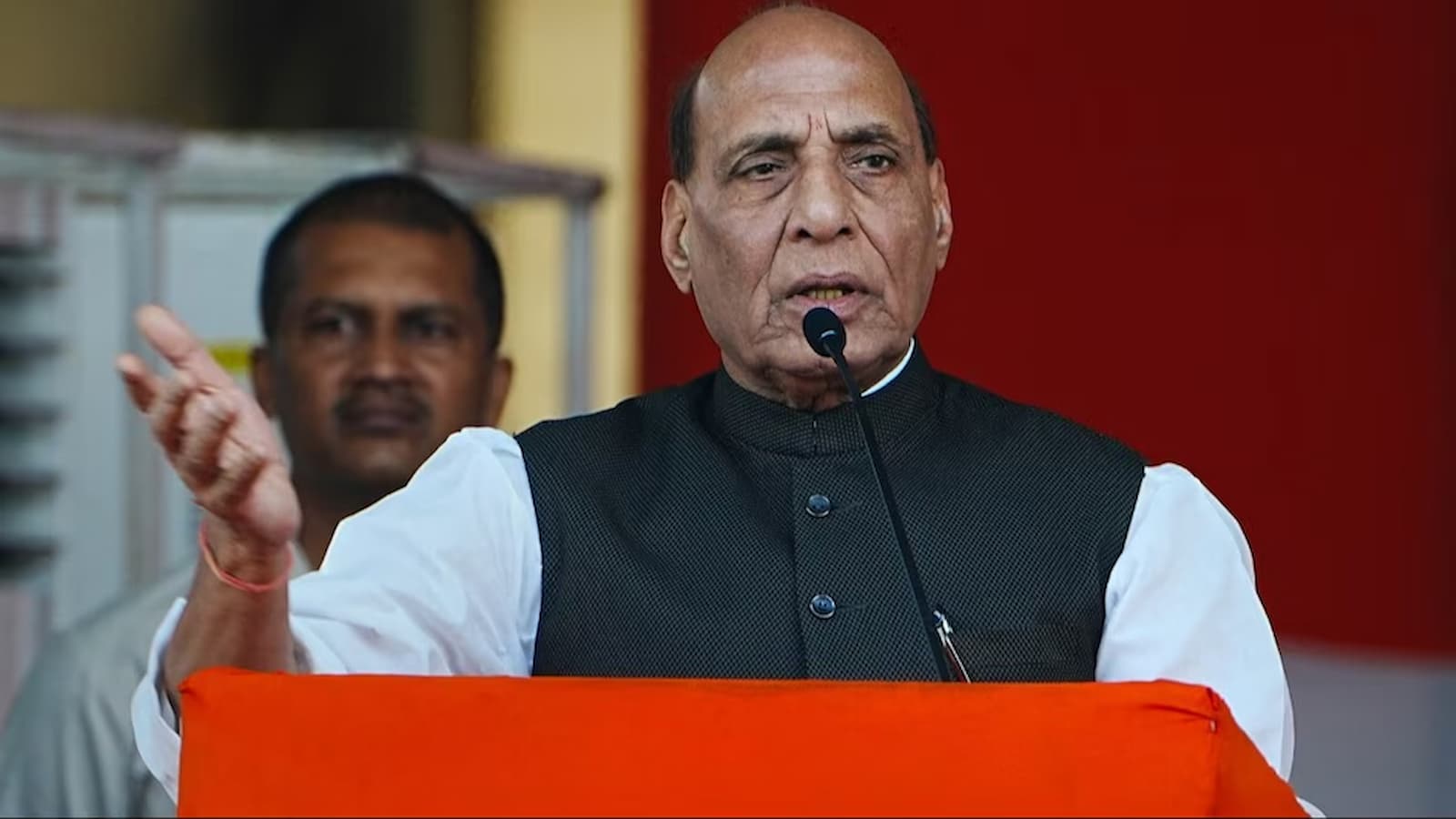
India Defence Ecosystem: Union Defence Minister Rajnath Singh spoke at the Convocation Ceremony of the 80th Staff Course at the Defence Services Staff College (DSSC) in Wellington, Tamil Nadu, on Thursday. During his speech, he strongly supported the idea of building a modern and strong Armed Forces through self-reliance. He said that to be fully ready for the future, India needs to focus on developing low-cost but high-tech solutions that will increase the fighting power of the military.
While speaking to officers from India and friendly countries, Rajnath Singh said, “Lessons of the ongoing conflicts teach us that building a resilient, indigenous, and future-ready defence technological and manufacturing ecosystem is not an option, but a strategic necessity. There is a need to develop low-cost, high-tech solutions and enhance the fighting capability of the Armed Forces. Our forces must not only keep pace with technological changes but also lead it.” Reported by Business Standard.
India and UAE to Boost Defence Cooperation through Joint Projects and Training
He explained that today’s world is changing very fast, and the Armed Forces must work together and stay ready for any situation. He added, “Armed Forces must operate jointly and remain future-ready in today’s ever-evolving multi-domain environment where cyber, space and information warfare etc. are as potent as conventional operations. A major pivot towards prioritising national security, a technological tsunami sweeping the global landscape, and accelerating innovation.”
Focus on Latest Trends and Tech
He encouraged the officers to carefully study the latest trends in defence and war strategies so that they can always stay ahead. He mentioned that the government under Prime Minister Narendra Modi is working very hard to make the Armed Forces strong, advanced, and ready for operations in many domains.
Talking about the changes in warfare, Rajnath Singh said that Artificial Intelligence and other new technologies are changing how wars are fought. He called the impact of these technologies “breathtaking.” Singh pointed out how in the Ukraine-Russia conflict, drones have become one of the most important tools in battle. He said, “In the Ukraine-Russia conflict, drones have virtually emerged as a new arm, if not a transformative science. The majority of losses of soldiers and equipment have been attributed neither to traditional artillery nor to armour but to drones. Similarly, space capacities in the Low Earth Orbit are transforming military intelligence, persistent surveillance, positioning, targeting and communications, thus taking combat to a new high.”
He explained that the world is now facing a new type of warfare known as Grey Zone and Hybrid warfare. In this type of warfare, countries use cyber-attacks, fake news, and economic pressure to achieve military goals without fighting a traditional war. He said these tools are now very powerful and can be used to cause damage without firing a single shot.
Admiral Tripathi Outlines 7 Points to Make Indian Navy More Battle-Ready
India Defence Ecosystem: Indian Boarder Threats
Rajnath Singh said that India continues to face threats along its borders. These dangers are made worse by terrorism and proxy wars from nearby countries. He also spoke about how troubles in West Asia and rising tensions in the Indo-Pacific region affect India’s safety. Apart from this, other problems like natural disasters and climate change are also becoming part of the security situation.
He said India must keep improving its Armed Forces so they can handle any future wars. He added that Prime Minister Modi’s dream of a developed India, called Viksit Bharat by 2047, depends on making India both strong and safe. According to him, these are the two most important pillars: Surakshit Bharat (Safe India) and Sashakt Bharat (Strong India).
The Defence Minister also spoke about the importance of all parts of the country working together to protect the nation. Rajnath Singh said, “Fostering a ‘Whole of Nation’ approach while undertaking actions in the entire spectrum of diplomatic, informational, military, economic and technological domains is key to ensuring success in this endeavour.”
He also talked about the Prime Minister’s vision called ‘MAHASAGAR’, which means Mutual and Holistic Advancement for Security and Growth Across Regions. He said that building a better and safer future must be a joint effort between many countries. “Increasing connectivities and dependencies among countries and people implies that the multitude of challenges are better faced together than individually. Mutual interests and synergies will help us achieve our goal at sub regional, regional and even global levels,” he said.
Rajnath Singh’s Advice to Officers
Before ending his speech, Rajnath Singh gave advice to the officers attending the course. He told them to remember five important words starting with the letter ‘A’, Awareness, Ability, Adaptability, Agility and Ambassadors.
He said, “As warfighters and protectors of national security, you need to remain aware of the environment and its implications. You must acquire the ability and skill set required by future leaders. You must imbibe adaptability and agility as key virtues. The battlefield of tomorrow will require leaders who can adapt to unforeseen circumstances, leverage technology to their advantage and come out with innovative solutions. You must become Ambassadors of your respective Armed Forces. Be an ambassador of change and the perfect role model amongst the society at large.”
Project Varsha in Visakhapatnam: India’s Next Big Defence Leap through INS Varsha
This year’s 80th Staff Course at DSSC includes 479 officers, including 38 from 26 friendly countries. There are also three women officers in the course.
Rajnath Singh also paid tribute to fallen soldiers by laying a wreath at the Madras Regiment War Memorial. He met with veterans and thanked them for their great service to the country. Chief of Defence Staff General Anil Chauhan was also present at the event.
The Defence Services Staff College, which was started in 1948, is one of the top training centers for the Army, Navy, and Air Force. It helps officers learn important skills for higher roles. More than 19,000 Indian officers and about 2,000 officers from other countries have completed their training here. Many of them have gone on to become top leaders in their countries and armed forces.
