
Why is NATO Setting Allies Tougher Targets for Air Defence and Missiles?
The move signified a fundamental shift—NATO had seen no need to draw up such plans for decades.

The move signified a fundamental shift—NATO had seen no need to draw up such plans for decades.
Ukrainian Ministry of Defense reports that on March 2, their air defense systems were operational and targeted two Russian aircraft for neutralization.
The British military is facing a recruitment crisis, with 16,140 full-time troops leaving in the last year, despite only 10,680 recruited, indicating a “failure” in defense.
Russia’s President Vladimir Putin warns of potential Western invasions, criticizing the West for arming Ukraine with long-range missiles, and warning of serious problems.
Switzerland’s summit on Ukraine aims to build trust with Russian officials by focusing on nuclear safety, food security, and returning kidnapped children.
US President Joe Biden has not ruled out military force for Taiwan’s defense in case of Chinese invasion, highlighting differences between ground, air, and naval deployment.
Italy plans to send a second SAMP/T air defense battery to Ukraine to help Kyiv counter Russian missile threats. The battery, one of five currently stationed in Italy, is part of a NATO program.
Labour leader Keir Starmer plans to announce new legislation for Armed Forces communities, including an independent Commissioner for the Armed Forces and the Armed Forces Covenant.
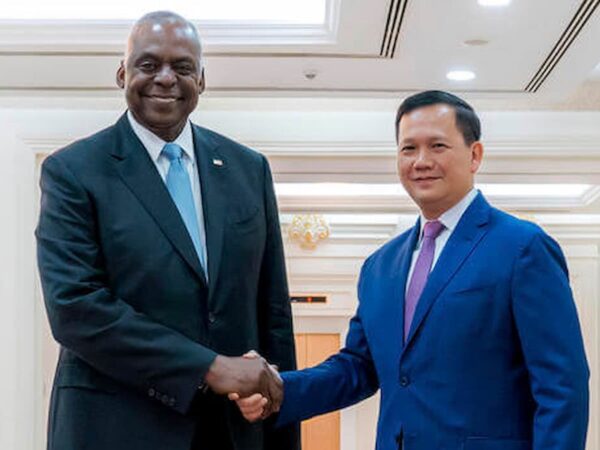
U.S. Defense Secretary Lloyd Austin proposed a thaw in tense relations between Cambodia and China, discussing resuming joint military exercises and easing Cambodia’s increasing proximity to China.
The Australian Defence Force (ADF) is expanding its recruitment pool to include UK, US, and Canadian citizens, addressing a shortage of recruits amid regional threats.