

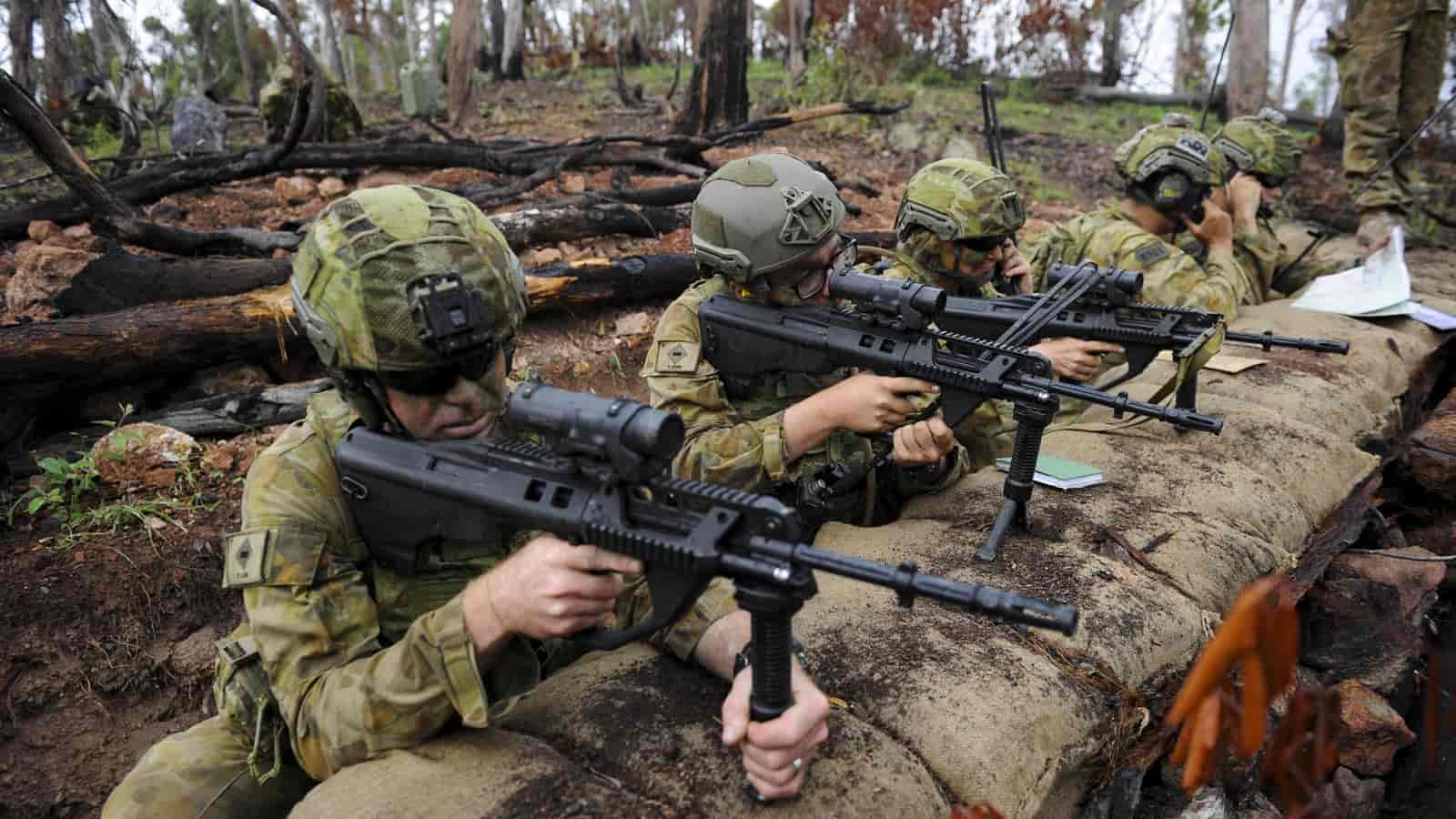
Australian Army Foreign Recruits: The Australian Defence Force (ADF) will accept recruits from other nations, including the UK, to fill its ranks.
As it works to bolster its military forces in response to what it claims are mounting regional threats, Australia has been grappling with a shortage of recruits.
Australian citizens of New Zealand who are permanent residents may apply to join starting in July. Beginning next year, applications will also be accepted from citizens of the UK, the US, and Canada.
According to BBC, the Minister of Defense Richard Marles, the modifications to the eligibility conditions are “essential to meet the nation’s security challenges through the next decade and beyond.”
AUKUS Relationship: Australia Won’t Be Forced into War with China, Says US General
He cited the long-standing “Anzac bond” between Australia and New Zealand as evidence of their shared experience of fighting side by side in Gallipoli during World War One.
Under an association known as the Five Eyes, Australia, the UK, the US, Canada, and New Zealand also collaborate closely on intelligence sharing.
While recruiting from these countries is a priority, according to Defence Personnel Minister Matt Keogh, “any” eligible permanent resident may apply as of January 1.
Canberra has voiced rising concerns over Beijing’s aggression on several occasions, and last year’s ADF strategic review identified the “growth and retention of a highly skilled defence workforce” as a critical countermeasure.
The former administration pledged money in 2020 totaling A$38 billion (£19.8 billion; $25.4) to fund a 30% increase in uniformed personnel within 20 years.
US Defense Secretary Lloyd Austin Highlights China’s Danger in Asia-Pacific Region
However, Keogh claims that the low unemployment rate in Australia has made it “very difficult” to hire new members, with recent government statistics indicating that the ADF is currently short 4,400 personnel.
Although Australia has a history of admitting a limited number of military transfers from a select group of allies, the new eligibility requirements are meant to increase the number of possible recruits by large numbers.
Applicants must not have served in the armed forces of another country for the preceding two years, be permanent residents of Australia, and meet ADF admission standards and security requirements.
According to Keogh, they must be qualified for Australian citizenship, which they will be “expected” to accept after 90 days of service.
The foreign affairs spokesman for the opposition said that while they were not opposed to the idea, the government’s defense strategy was damaging the defense force’s reputation and morale.
According to Simon Birmingham, Sky News Australia, “We want to see Australians wearing the Australian uniform, ideally.”
