

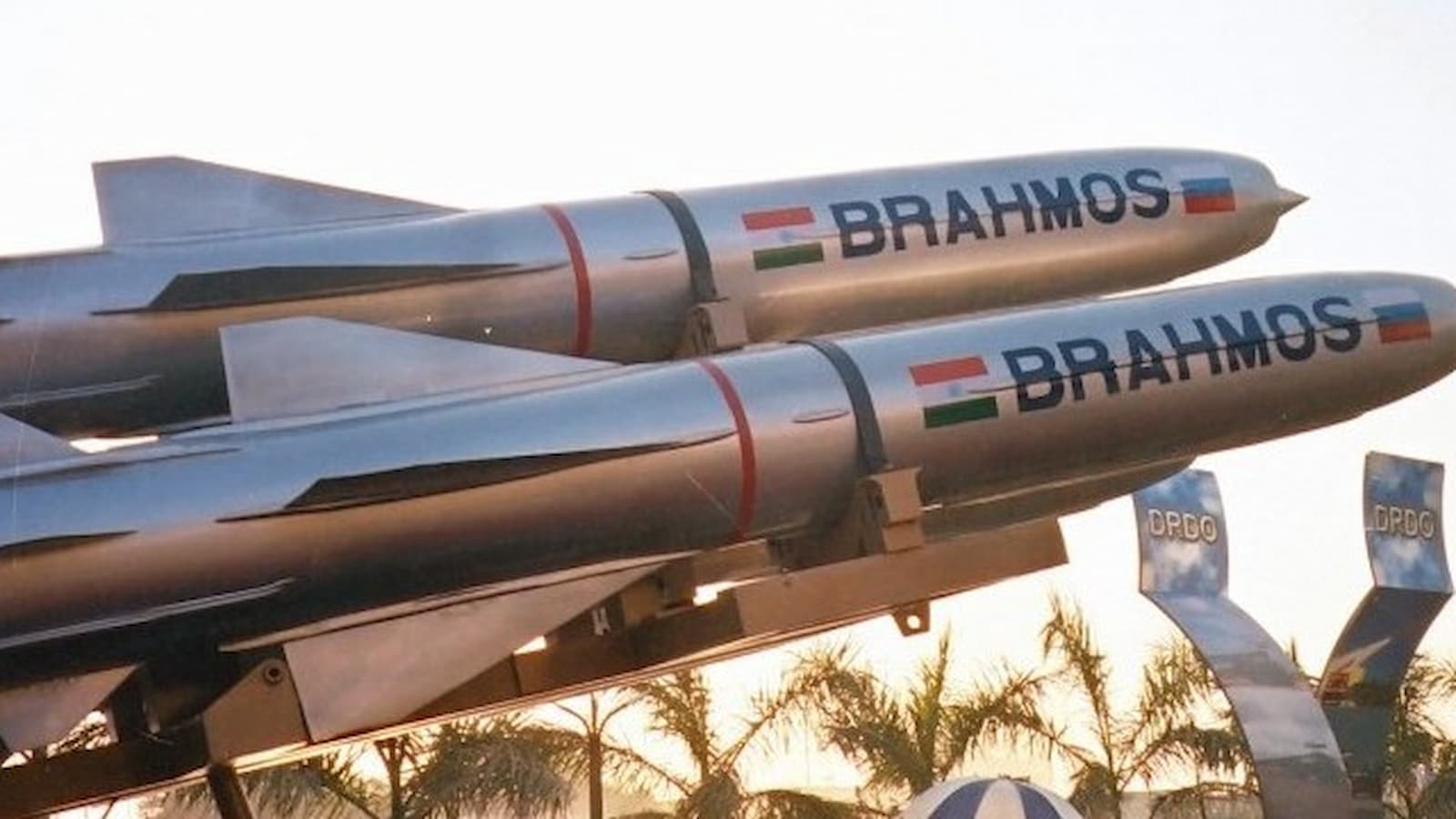
BrahMos and Akashteer: When Indian armed forces started Operation Sindoor in May, people saw something very new. Drones were shot down in the sky with missiles and it showed how India wants to fight in the future. Defence Minister Rajnath Singh later said in August, “The operation was a sign of the new art of warfare, a glimpse of a new vision, technological advancements and self-reliance.”
Indian Navy’s INS Sindhuvijay Heads to Visakhapatnam for Mid-Life Upgrade
This fight also became the stage where India showed its secret missile shield for the first time, a system that works like an invisible wall against enemy rockets. For India, this was not just about winning battles but also about proving it can build and use advanced weapons on its own.
Clashes with Pakistan
The clashes with Pakistan in May became the most deadly fight between the two since the Kargil war of 1999. More than 70 people died because of missiles, drones and artillery fire. A senior Indian Army officer told AFP that the exchange gave the military “a very good understanding” of how weapons work in real war.
According to Money control, he also said, “These were golden insights for us — and our rapidly expanding industry partners.” The battle gave Indian scientists and companies a chance to see how their new systems worked under pressure.
Among the weapons that India tested in that time was Akashteer, which soldiers also call “Sky Arrow.” It is a vehicle-mounted air defence system that uses AI to track and destroy threats. During the clashes it took down both drones and missiles. India also fired several BrahMos cruise missiles at Pakistani airbases. The BrahMos, built together with Russia, already had buyers like the Philippines, but after Operation Sindoor, it got even more attention. Rajnath Singh told AFP in July, “Because of the stellar performance of these BrahMos missiles, 14 or 15 countries have reached out to supply these missiles.”
Experts also saw the battle as a kind of open test for Indian weapons. Ashok Malik from The Asia Group said to AFP, “It is one thing for me to buy something which you’ve made. It is another to buy something which you’ve made and successfully used in the field.” For him, Operation Sindoor became like a live advertisement, showing the world that Indian weapons are not only built but also work in war.
Self-reliance and exports
India is now pushing its “Make in India” plan very strongly. The government has already announced new projects like making its own fighter jet engines and building a defence system like Israel’s Iron Dome, which they plan to call Sudarshan Chakra, named after the spinning weapon of Lord Vishnu. India also wants to grow fast in the drone sector. By 2030, the drone industry could be worth 11 billion dollars, and Indian firms are already building new drones with the help of Israeli companies.
But India still faces some challenges. In April, Junior Civil Aviation Minister Murlidhar Mohol told parliament that 39 percent of key small drone parts still come from China. This shows India is not fully free from outside supplies yet.
Madhya Pradesh Launches Draft SpaceTech Policy 2025 for Feedback
Even with such issues, India’s defence industry is growing faster than ever. India used to be one of the world’s biggest importers of arms, but now it wants to be seen as a maker and seller. In 2024-25, defence exports hit a record 2.8 billion dollars, which is 12 percent more than the year before and 34 times more than ten years ago. Domestic production also touched 18 billion dollars, almost double what it was five years ago.
Today our India sells weapons to more than 100 countries, including the United States, France and Armenia. The list of exports is wide, from missiles and artillery to boats, rocket launchers, radars, software and even electronic parts.
