

Su-57E Engine ToT to India: Russia has reportedly approved a transfer of technology (ToT) that would allow India’s Hindustan Aeronautics Ltd (HAL), specifically its Koraput facility, to produce the Su-57E’s advanced turbofan (often reported as the Izdeliye-177S family or related thrust-vectoring variants). If implemented, the move would be a major step in India’s long-running push for aerospace self-reliance and could place India among the very small group of countries able to design and build propulsion for fifth-generation fighters.
Recent Indian and international defence outlets reported the development in early December 2025.
Multiple defence and Indian news outlets reported in December 2025 that Moscow has signalled approval to transfer full technology for the Su-57E’s engine (the reports typically name the advanced thrust-vectoring turbofan variant) and that HAL’s Koraput plant has been identified as the likely production hub in India. The coverage says the transfer includes key hot-section technology and the know-how required to manufacture the engine locally under licence not merely assembly of shipped kits.
A fighter’s engine is the heart of the aircraft: thrust levels, fuel efficiency, reliability, and advanced features like thrust vectoring directly affect speed, maneuverability, supercruise (sustained supersonic flight without afterburner) and radar/thermal signatures. The Su-57 family has evolved through a sequence of Russian turbofans (earlier AL-41-derivatives and newer Izdeliye/“product” 30/177 variants).
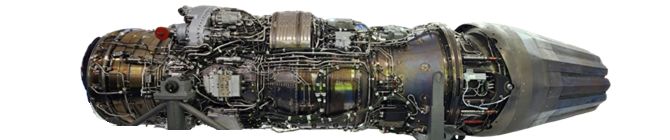
Transferring production of these engines, especially the more advanced variants, is more technologically demanding than building airframes because of tight tolerances, superalloys, coatings, turbines, and control software. Reports say the ToT would cover critical components and design data, not only assembly instructions.
Su-57E Engine ToT to India: Why HAL Koraput?
HAL’s Koraput facility already has experience with Russian turbofan engines (for example, work on AL-31 variants used in Su-30MKI fleets), machining capability, and a local aerospace supply chain. That existing base shortens the learning curve compared with starting from scratch. The proposals described inthe recent reporting position Koraput as the logical place to indigenise major engine modules and eventually produce serial engines for Su-57E airframes produced or assembled in India.
Geopolitics and the “fifth-gen club”
If India truly gains licensed production and deep ToT for an engine that is understood to power a fifth-generation fighter, it would join a very small group of nations with domestic capability to produce such propulsion systems (the United States and China and Russia itself). That matters because propulsion technology is one of the most sensitive, dual-use, and strategically valuable capabilities in modern air combat.
Having it locally would reduce India’s external vulnerability for sustainment, upgrades and export control pressures and it would materially strengthen New Delhi’s negotiating power when planning future fighter procurements or co-development projects. Several recent reports explicitly frame the development as putting India into that “elite” group.
Russia Offers Su-57E to India: Full Details on 6th-Gen Fighter, Tech Transfer, Costs, and Pathway
Practical benefits for India’s programs
Beyond prestige, local engine manufacture could yield clear operational and industrial benefits:
Faster sustainment and lower lifecycle costs for Russian-origin fighters in IAF service, because critical spare parts and repairs could be handled domestically.
Potential to upgrade in-service aircraft (for example, later Su-30 maintenance/upgrades) with more modern hot-section parts or control software localized under Indian engineering oversight.
A platform for learning and spillover into India’s indigenous Advanced Medium Combat Aircraft (AMCA) program and private sector engine development, because mastering production processes and metallurgy is transferable knowledge.
Su-57E Engine ToT to India: What to expect next?
1. A formal bilateral agreement between the parties that defines the scope of transfer of technology along with financial terms.
2. Technical exchange visits and comprehensive inspections of HAL Koraput’s factory and raw material sources. Some sources have reported that Russian technical teams have already submitted assessment reports to HAL.
3. The pilot production and testing followed by the iterative certification stages, which constitute a multi-year process preceding serial production and fleet introduction.
How does this relate to India’s ‘Atmanirbhar’ and ‘Make in India’ goals?
India has publicly pushed for defence self-reliance for years. A ToT that hands over deep engine know-how would be one of the most tangible deliverables for that policy in the aerospace domain, potentially enabling downstream exports and strengthening domestic suppliers. That’s why many reports highlight this as a “win” for Make-in-India and Atmanirbhar Bharat narratives. But again: execution and industrial follow-through will determine whether this remains a headline or becomes a sustained capability.
