
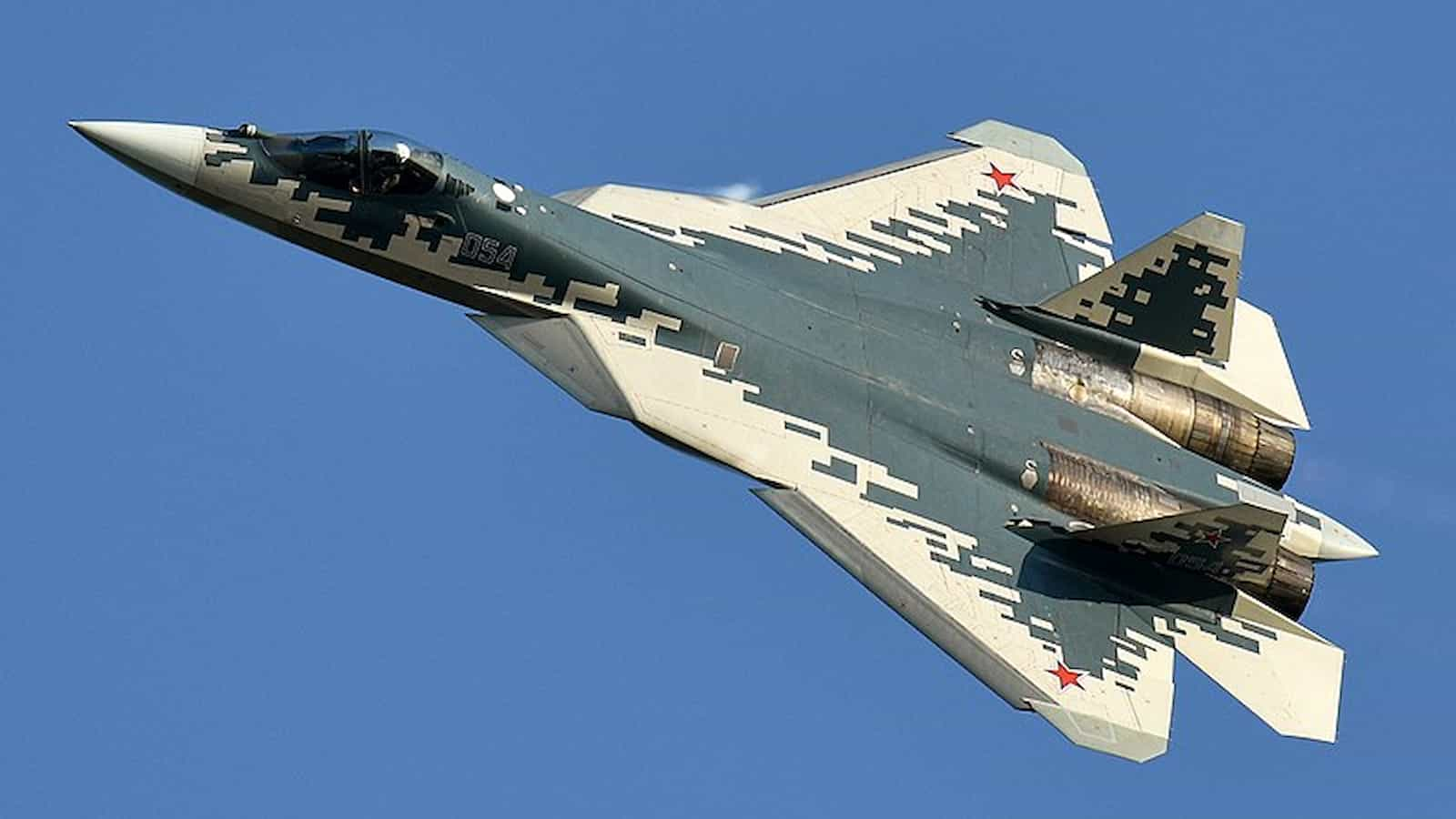
Russia Offers Su-57E to India: Russia has in recent months renewed a high-stakes pitch to New Delhi: supply and license the Su-57E, an export variant of Russia’s fifth-generation Su-57 stealth fighter, and pair that offer with deep technology transfer, local production and even a path to joint development of future, sixth-generation fighters and bombers. The offer is being discussed at multiple levels (defence industry talks, media reports and during high-level visits) and is framed by Moscow as a “two-track” approach: immediate delivery and capability uplift for the Indian Air Force (IAF), plus long-term co-development of next-generation platforms.
What exactly is Russia offering?
At the core are three headline items:
An initial supply of Su-57E aircraft to the IAF.
Licensed manufacture and high-value technology transfer inside India (including avionics, airframe and reportedly engine know-how).
Cooperation to co-develop future sixth-generation fighters and bombers, sometimes framed as a revival or reboot of earlier FGFA ambitions, but on new terms.

Reports describe offers ranging from two to three squadrons delivered from Russia, followed by phased Make-in-India production, to access to constrained intellectual property such as source code and stealth-materials know-how.
Russia Offers Su-57E to India
India’s fighter squadrons have been shrinking over the last decade and the IAF has repeatedly said it needs more high-end aircraft to deter regional threats. Fifth-gen fighters provide low observable (stealth) capability, sensor fusion and advanced avionics that change the air-combat calculus; acquiring Su-57Es could give India an immediate plug-in to fifth-gen capability while its indigenous AMCA programme matures. Russia’s packaging, which it offers both aircraft and transfer appeals to India’s desire for sovereign capability building under “Make in India.”
The 6th-generation Pitch
Russian sources and specialist defence outlets say Moscow is willing to cooperate beyond the Su-57, proposing a joint pathway to sixth-generation fighters and even new strategic bombers. For India, this could be tempting: access to next-gen sensor fusion, directed energy research, crew-assist/autonomy systems, and engine technologies that are otherwise hard to acquire.
But long-term co-development brings thorny issues: intellectual property protection, export controls, cross-licensing, shared R&D costs and the need for aligned operational requirements. Whether this becomes a genuinely balanced partnership or a supplier-driven collaboration will depend on detailed legal and technical safeguards negotiated by New Delhi.
Industrial and technological implications for India
One of the most consequential parts of the pitch is the reported willingness to share engine technology. Indian progrchain, notably AMCA (Advanced Medium Combat Aircraft) have long been constrained by engine availability; access to the Su-57’s advanced engine family (Izdeliye-177/Product-177 variants) and manufacturing know-how would be a major boost, potentially accelerating AMCA development and helping India move from assembly to serious indigenous design-to-production capability. But licensed production of such engines implies complex technology transfer, strict quality standards, and long lead-times for setting up high-precision aero-manufacturing facilities.
Costs and timelines
Public reports suggest a staged approach: delivery of a handful of ready-to-fly aircraft first; follow-on batches built in India under license; and parallel R&D for future co-development.

But timelines for such complex transfers are multi-year setting up production lines, certifying engines, qualifying stealth materials and integrating indigenous subsystems all take time. Costs are not yet publicly fixed; any Indian-manufactured Su-57E would carry the overhead of industrial setup and supplier development. The IAF’s own prioritisation (fleet mix, numbers, training pipeline) and budget constraints will be decisive.
Policymakers in India will weigh:
- Immediate deterrence and squadron strength gains.
- The strategic value of deep tech transfer to AMCA and other programmes.
- The legal and IP protections in any transfer agreement.
- Budget and industrial capacity to absorb licensed production.
Geopolitical signalling, including Washington’s likely reaction and implications for joint programmes such as GCAP.
Russia Offers Su-57E to India: Likely scenarios and next steps
Short term, expect intensive diplomatic and defence-industrial talks: memoranda of understanding, technical evaluation teams and trials. Medium term, India could opt for a hybrid path, procure a limited number of Su-57Es to field stealth capability quickly while continuing AMCA and exploring joint R&D.
In a best-case industrial outcome, India secures meaningful technology transfer and builds domestic lines; in a worst-case case it ends up with limited upgrades and a dependence on foreign-supplied proprietary systems. Political leadership, procurement discipline and clear industrial terms will determine which path is taken.
