


India’s RCWS-Sharur Features: India just took another big step toward defence self-reliance by developing the RCWS-Sharur, which is basically an indigenous Remote-Controlled Weapon Station. It’s meant for the Indian Navy and it was made by Bharat Electronics Limited (BEL). The idea is to boost what naval warships can do in combat while also keeping the sailors safer, since the weapons can be run from a distance instead of being handled directly on the deck.
What Is RCWS-Sharur?
RCWS-Sharur is a remote-controlled naval weapon station that lets the operator identify, follow and engage targets without stepping out onto the deck. Rather than manually operating the gun, sailors manage it from a protected area inside the ship, using electronic sensors along with targeting systems. In practice, this kind of setup helps survivability in a fight and it keeps the firing accuracy fairly consistent too, even when things get dreadful.
India’s RCWS-Sharur Features
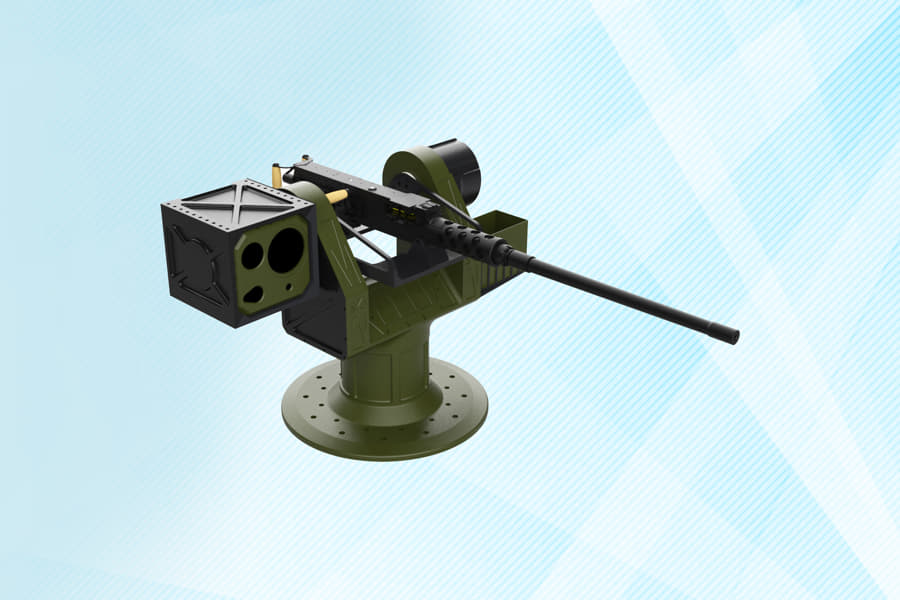
This new station brings together a set of advanced technologies including:
- A 12.7 mm heavy machine gun as the main armament
- A 40 mm automatic grenade launcher can be mounted if needed, depending on mission demands
- It can also be configured to carry two Man-Portable Anti-Tank Guided Missiles (MPATGM)
- The system supports 360-degree rotation for full all-side engagement
- The effective firing range is stated as up to 2,000 metres
- It supports remote operation from inside the ship, which improves crew protection during engagements.
Overall, these capabilities make the platform useful for both defensive actions and offensive naval missions depending on how the Navy wants to employ it.
Indian Navy P-8I Upgrade: New AAS Radar, Price, Features and Security Boost
Advanced Surveillance and Targeting
One of RCWS-Sharur’s biggest strengths is its integrated electro-optical fire control suite built in eyes and brains which brings together a few things at once, including:
- High-resolution day camera
- Thermal imaging system for night operations
- Laser rangefinder
- Automatic target tracking
With all of those working in tandem, operators can lock on to targets more precisely, both in daylight and after dark even when the weather is being difficult. That means threats can be engaged with better aim and overall more accuracy in real situations.
Future Anti-Drone Capability
BEL is also looking to further tune RCWS-Sharur by adding the Naval Anti-Drone System (NADS) in the next versions. This expected upgrade should help the Indian Navy spot and neutralise unmanned aerial vehicles (UAVs) much more effectively and this is getting more important as naval warfare keeps changing.
Some of the key advantages would be:
- Improved crew safety via remote operation, so people stay at a safer distance.
- Better precision and enhanced situational awareness.
- More flexibility using modular weapon choices.
- Less reliance on imported naval weapon stations.
- Support for the Make in India and Atmanirbhar Bharat initiatives, exactly along those lines.
Current Status
Right now, RCWS-Sharur is in the final trials stage for the Indian Navy. After testing ends successfully, it should be fitted on Indian naval vessels which is intended to bolster maritime security and raise operational readiness across India’s strategic waters.
