
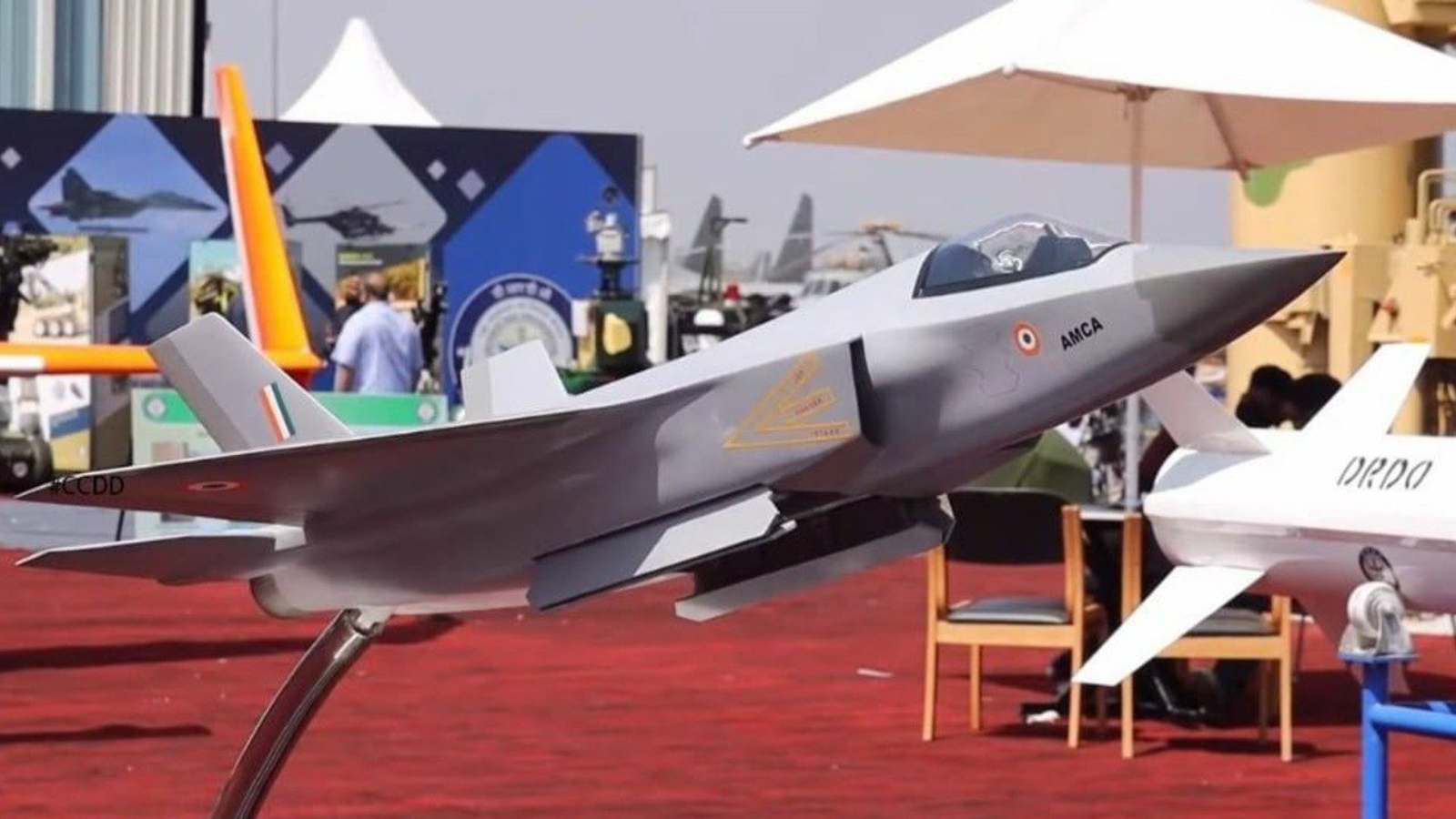
India AMCA Project: India is slowly getting closer to building a powerful jet engine on its own for a future stealth fighter aircraft. The engine is being planned for the Advanced Medium Combat Aircraft called AMCA. This work is being done by India’s Defence Research and Development Organisation (DRDO) together with French aerospace company Safran.
The new engine is expected to belong to the 120 kN thrust class. One important part of this plan is the use of India’s own single-crystal metallurgy technology. If successful, this engine will power India’s next generation stealth fighter jet in the future.
DMRL Hyderabad Transfers Advanced Defence Material Technologies to Indian Industry
India’s AMCA Fighter Jet Project
The Advanced Medium Combat Aircraft, or AMCA, is India’s upcoming fifth-generation stealth fighter jet. The aircraft is being designed by the Aeronautical Development Agency with support from DRDO.
The jet is being built to include modern technologies used in advanced combat aircraft. One of the main features is its stealth shape, which helps the aircraft stay hidden from enemy radar. The fighter is also expected to have modern avionics systems and advanced sensors to improve combat awareness.
Another important ability planned for AMCA is supercruise. This means the aircraft can fly faster than the speed of sound without using an afterburner. The jet is also designed for long-range strike missions so it can attack targets far away.
According to the current programme timeline, the first AMCA prototype could appear sometime in the late 2020s. The aircraft is expected to enter service with the Indian Air Force around 2034-2035.
At first the AMCA Mk1 version will likely use engines that come from foreign suppliers. Later, the AMCA Mk2 version is planned to use the new indigenous engine that India is developing with Safran.
Technology Behind the New Engine
India has chosen Safran Aircraft Engines from France as its partner for the development of this next generation engine. The plan is for both sides to work together on designing and building a turbofan engine in the 110–120 kN thrust category.
The development process is expected to take around ten years. A key part of this deal is the transfer of technology from Safran to India. Unlike earlier deals where India mostly assembled engines built elsewhere, this project focuses on joint development and deeper technical knowledge.
UP Defence Corridor Gets Rs 35,526 Crore Investment Proposals
Most of the engine manufacturing is expected to take place in India. The intellectual property rights will also stay with India, which could help the country develop future jet engines without depending heavily on foreign suppliers.
One very important part of a modern fighter jet engine is the turbine blade. These blades are meant to be inside the engine where the heat and pressure are extremely high. this is the reason advanced fighter engines use special single-crystal metal blades. This material helps the blades survive very high temperatures.
India’s Defence Metallurgical Research Laboratory, also known as DMRL, has already gained experience in developing single-crystal metallurgy. Using this technology in the AMCA engine could greatly improve India’s ability to design advanced jet engines on its own. But building such high-performance engines is still technically difficult and requires years of testing.
The engine being planned for AMCA is expected to produce about 75 kN of dry thrust. When the afterburner is used, the thrust could reach around 110–120 kN. Engineers are also thinking about future upgrades. In later versions the engine’s thrust may increase to about 140 kN.
