

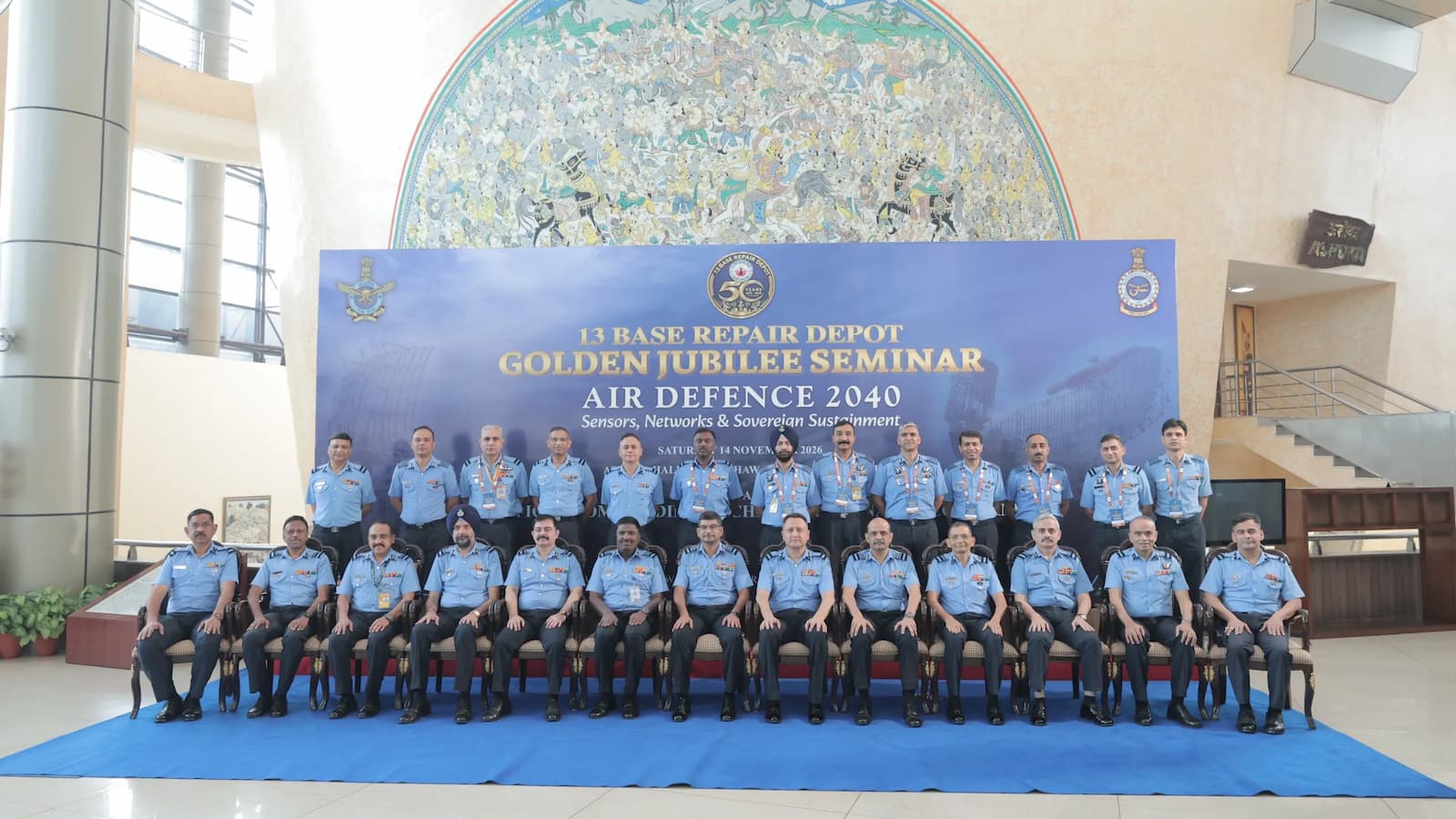
IAF’s Hydrogen Fuel Cell Technology: The Indian Air Force’s (IAF) 13 Base Repair Depot has completed 50 years of service. The occasion was marked with a special seminar in New Delhi on November 14, focusing on India’s future air defence needs and the importance of developing defence technology within the country.
The event was held at the Manekshaw Centre under the theme “Air Defence 2040: Sensors, Networks & Sovereign Sustainment”. It was attended by senior military officers, former service personnel, representatives from the Defence Research and Development Organisation (DRDO), academics and members of the defence industry.
Air Marshal Yalla Umesh, VSM, PhD, Air Officer Commanding-in-Chief of the IAF’s Maintenance Command, presided over the seminar. The discussions mainly focused on improving India’s ability to maintain its air defence systems without depending too much on foreign support.
Ireland Police Buy Israeli-Made Anti-Drone Systems Despite Government Ban on Defence Purchases
13 Base Repair Depot Completes 50 Years of Service
Established in 1976, the 13 Base Repair Depot plays an important role in keeping the Indian Air Force’s radar and communication systems in working condition. It repairs damaged equipment, carries out major maintenance work and provides support throughout the working life of these systems.
The depot started as part of the Radar and Communication Project Office. Over the last five decades, it has helped the IAF maintain important equipment used for air defence. Its work also helps ensure that these systems remain available and reliable when needed.
During the event, the Air Officer Commanding of the depot spoke about its journey since 1976. He also recognised the work of former personnel who helped build the organisation. He stressed that India needs stronger local engineering and manufacturing capabilities to meet future air defence requirements.
Air Marshal Yalla Umesh also said that an air defence system is only useful when it’s available and ready for operation. He explained that maintenance shouldn’t be treated as something to think about after buying or installing equipment. It should be planned from the beginning.
He also encouraged Indian defence companies to develop equipment that can be tested, repaired and maintained within India. This will help the country become more self-reliant in defence technology.
Air Defence 2040 And New Technologies Discussed
The seminar also covered several technologies that could become important for India’s future air defence network. Experts discussed quantum sensing, better radar systems and ways to connect different defence systems through communication networks.
European Defence Agency Tests Drones and Ground Robots in Switzerland for Urban Warfare
The main topics included modernising existing radars and improving life-cycle management. These efforts are aimed at keeping equipment useful for a longer period and making sure different parts of the air defence network can work together.
