

US Marine Air Defense: Before the Marines receive any of the three new air defence systems—Medium-Range Intercept Capability (MRIC), Marine Air Defense Integrated System (MADIS), and Light MADIS—testing is scheduled for 2025.
As far as cost and schedule performance go, the Marines are on track to deploy these systems, said Col. Andrew Konicki, program manager for Ground Based Air Defense (GBAD).
That is largely a result of the threat; it is not anything that we are doing from the program office. As reported by Breaking Defense, Konicki stated at the Modern Day Marino event last week that the threat is always developing.
Building defences with MRIC integration
The Marine Corps is supposed to include the MRIC in its arsenal to improve defense against cutting-edge threats like bigger drones and cruise missiles.
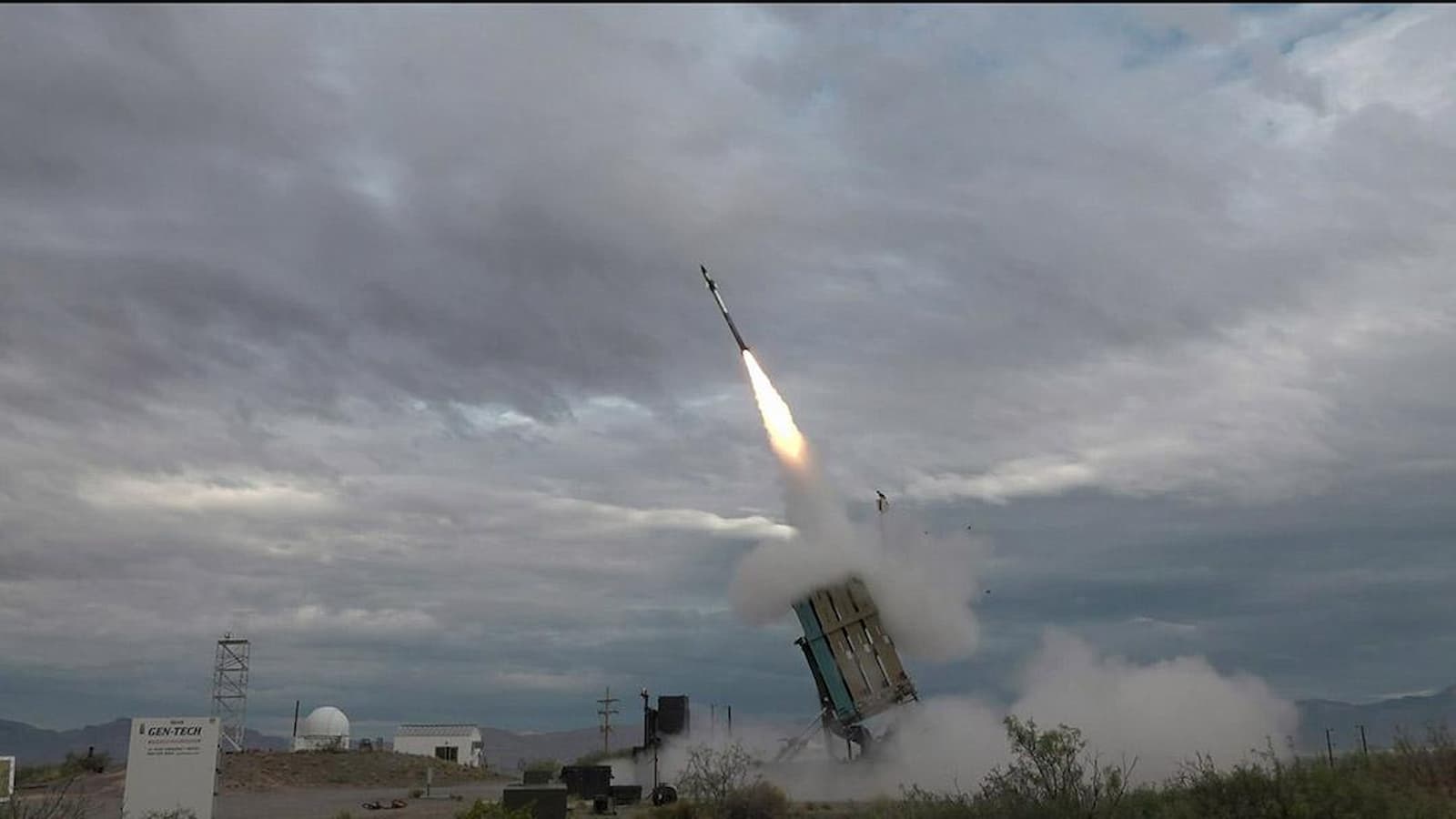
Based on the Iron Dome in Israel, this mobile system uses Tamir interceptors and a truck-mounted launcher. It combines the AN/TPS-80 Ground/Air Task Oriented Radar (G/ATOR) with a small battle management control (BMC) system and the Common Aviation Command-and-Control System (CAC2S).
UK’s New Submarine to be Operational by 2030s, Says Minister of State for Defence
Many in-air objects, each with a different flight trajectory and velocity, have encircled the MRIC prototype during earlier testing. The Tamir missile fired by the MRIC hit every target.
“The Marine Corps and the Defense Department, as a whole, have been living with the comfort of air superiority and air supremacy,” said Maj James Slocum, MRIC Medium Range Intercept Capability team lead at PEO Land Systems, back in July 2022, during a test of the prototype. “As long-range cruise missiles and anti-air weapons systems begin to get better and better, air supremacy is not something we can take for granted. We must be able to counter these types of capabilities.”
Additionally, this system is necessary for Force Design 2030, this system closes a vital capability gap for the Marine Corps. In September, Konicki described the strategy to do a rapid reaction assessment with MRIC and then train Marines on its use and deployment. In addition, a program-savvy insider said the military plans to purchase 80 Tamir interceptors from Israel in 2024.
Integrating defence weapons based on vehicles
Two vehicle-based defence weapons, MADIS and LMADIS, are under consideration by the Marines for addition to their arsenal. Both are slated for operational testing and, should they pass, deployment to the Indo-Pacific area the following year.
Two Joint Light Tactical Vehicle (JLTV) Heavy Guns Carrier designed to work together make up MADIS. The first vehicle includes an electronic warfare system, electro-optical/infrared optic, remote weapons station, command and control suite, and 360-degree radar. A 30mm XM914 cannon, stinger missiles, an RS6 remote weapon station from Kongsberg, electronic warfare capabilities, and other characteristics are all housed in the second vehicle.
Using electronic weaponry on a lightweight and small platform, the Polaris MRZR, the LMADIS may be flown to far-off and difficult locations.
The current drone danger makes an expeditionary system urgently needed to successfully counter it. According to the Marines, the LMADIS satisfies this demand by offering a fast-deploying and attachable solution to forces in need of counter-UAS capability.
