


Royal Navy Tracks Russian Submarine: Over three days in early December 2025 the Royal Navy openly shadowed a Russian Kilo-class submarine identified in official UK reporting as Krasnodar and its escorting tug Altay as they moved from the North Sea, through the Strait of Dover and into the English Channel. The Royal Fleet Auxiliary tanker RFA Tidesurge and an embarked Merlin anti-submarine helicopter were the visible UK assets that kept the group under observation until a NATO ally took over near Ushant (off northwest France).
Why the Royal Navy tracked the submarine?
The transit matters for three reasons.
1. The English Channel is one of the world’s busiest international waterways, movements there are closely watched for safety and security.
2. Western militaries have grown more vigilant about Russian undersea activity since 2022, seeing a rise in patrols and operations near NATO coasts and maritime infrastructure.
3. Overt tracking is both a practical surveillance measure (to know where potentially hostile platforms are) and a political signal: it demonstrates that NATO and UK forces are monitoring and ready to respond if necessary.
Context about broader UK efforts to counter “underwater threats,” including new surveillance programmes announced this year, helps explain the increased attention.
Which ships and aircraft were involved?
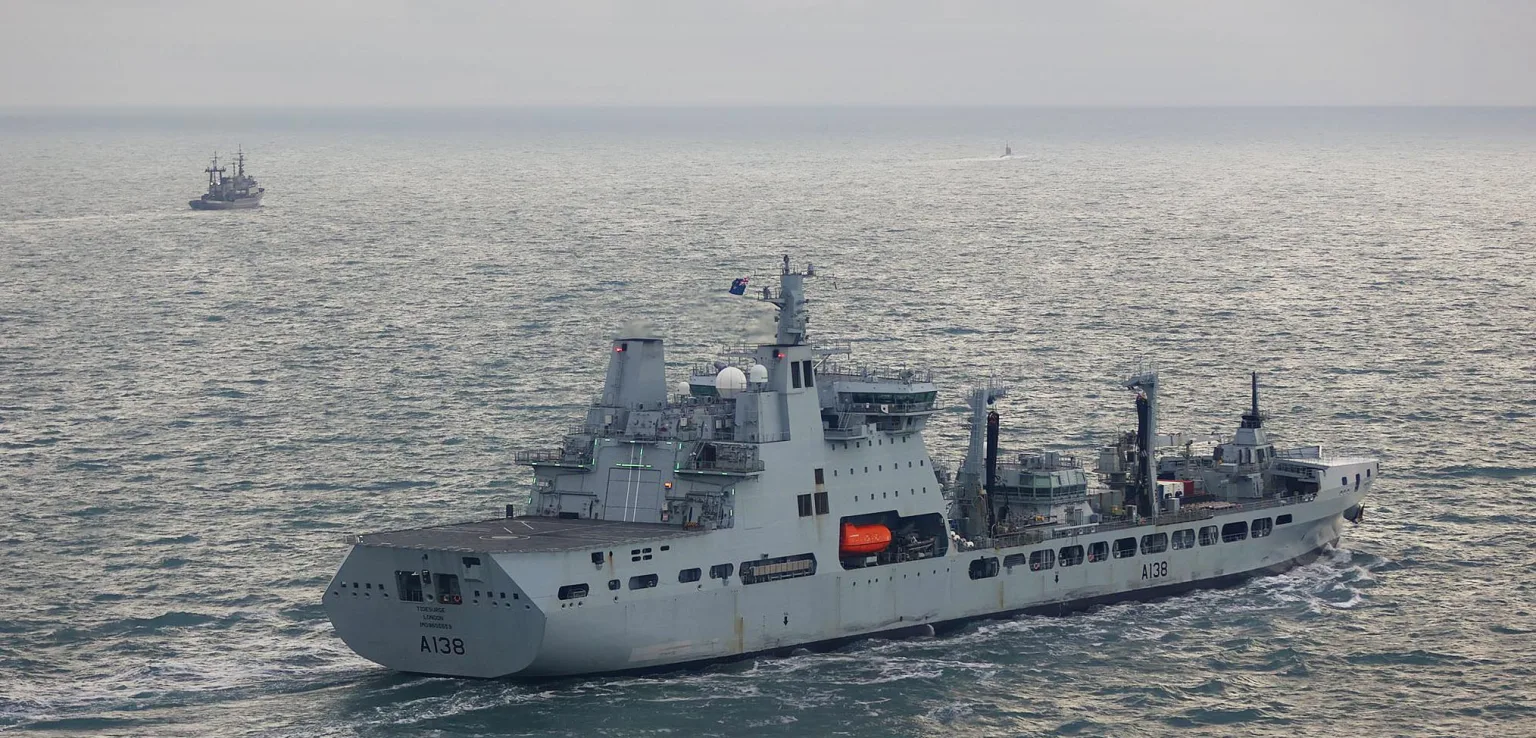
The UK published an operational summary naming the main players: RFA Tidesurge (a Royal Fleet Auxiliary tanker that can host helicopters) and a Merlin helicopter from 814 Naval Air Squadron. Merlins are multi-role naval helicopters routinely used for anti-submarine and surface surveillance. On the Russian side the transit included the diesel-electric Kilo-class submarine Krasnodar and the tug Altay; local reporting also mentions other escort/support vessels in the wider group. The Royal Navy said the Merlin was prepared to pivot to anti-submarine operations if the Russian sub dived.
What is a “Kilo-class” submarine?
“Kilo” is NATO’s name for a family of Russian diesel-electric attack submarines (Project 877 / 636 variants). They are known for good acoustic stealth at low speeds and are often used for coastal patrols, anti-ship and anti-submarine tasks. Because they are diesel-electric, they can transit on the surface (or snorkel) to keep speed and range; in deeper or stealthy transits they operate submerged. That helps explain why the UK would keep an airborne anti-submarine asset nearby to detect a dive and track underwater signatures.
How do navies track submarines?
Tracking a submarine uses a mix of sensors and platforms: surface ships with sonar, helicopters with dipping sonar and sonobuoys, maritime patrol aircraft, friendly submarines, and passive acoustic networks. Helicopters (like the Merlin) are particularly useful in the shallow approaches to the Channel; they can localise a submerged target quickly. Surface vessels provide a persistent presence and can house airborne assets. Newer initiatives add AI-assisted sensor webs and unmanned platforms to extend coverage.
Royal Navy Tracks Russian Submarine: Timeline and geography
According to the Royal Navy, the Russian group sailed west from the North Sea, passed through the Strait of Dover (the narrowest part of the English Channel), and continued across the Channel toward the northwest coast of France.

The Royal Navy shadowed the group for about three days, handing over responsibility to allied forces once the vessels neared Ushant. Public reporting dates the operation to around 11–12 December 2025.
UK Royal Navy Plans to Deploy Autonomous Ships and Fighter Drone
What do the Royal Navy and NATO say publicly?
Commanding Officer of RFA Tidesurge, Captain James Allen, said: “There is nothing like a Russian submarine to focus the mind for any mariner.
“Our tasking over the course of three days involved the teamwork and professionalism of all RFA Tidesurge ship’s company, embarked 814 Naval Air Squadron Atlantic Flight and interoperability with near regional NATO allies.
“We worked together as a show of presence and deterrence as we transited from the North Sea to the English Channel.”
Lieutenant Commander David Emery, Flight Commander of 814 Naval Air Squadron’s Atlantic Flight, said:
“Maintaining an overt presence and continued overwatch of Russian vessels in UK waters is vital for national security.
“The flexibility and professionalism of the crew of RFA Tidesurge allows us to project our helicopter wherever, day or night, in the maritime environment.”
Is there a danger to civilians or shipping?
No immediate danger to the public has been reported. Commercial shipping routinely shares the Channel with naval vessels; navies follow international rules (COLREGs) and maritime safety protocols. The visible naval monitoring is intended to protect safety and sovereignty, not to threaten ordinary vessels or coastal communities. If there were a credible safety risk, maritime authorities (e.g., UK Coastguard, local ports) would issue navigational warnings. For day-to-day readers: normal ferry and commercial services are unaffected by routine military shadowing unless authorities publish a NOTAM or NAVTEX.
