
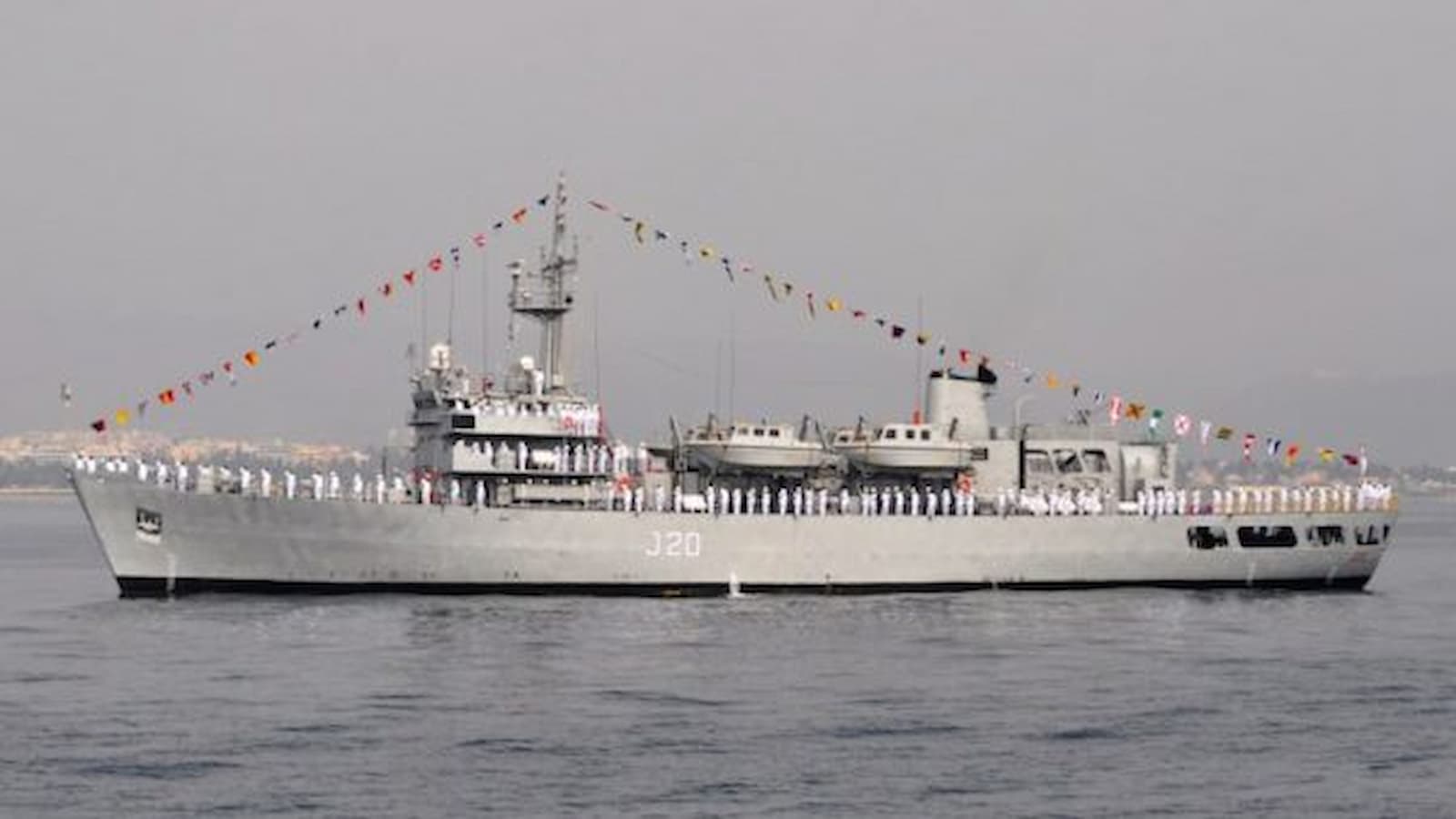
F125 Frigate Class Support: The German Bundeswehr has extended a current contract for the technical-logistical support (TLS) of the F125 German Navy frigate class for an additional five years, ending on March 1, 2029.
With this change, the two German suppliers, Thyssenkrupp Marine Systems and the NVL Group, who are part of the ARGE F125 consortium, will guarantee the operational readiness of all four ships in the class as well as the testing and training facility in Wilhelmshaven, northern Germany.
Arge F125 designed and constructed the multifunctional frigate known as the F125 for the German Navy.
The four surface combatants were first created, constructed, and supplied to the German Navy between 2005 and 2022. They have a two-year maximum deployment duration before they must return to their home base. Even in tropical environments, they may run for up to 5,000 hours annually.
Germany Urges for Inter-Governmental Agreement to Secure Submarine Deal with India
F125 Frigate Class Support
Participating in cooperative assignments, such as international assignments in network-centric operations, is the primary goal of the F125 frigate. The recent TLS update is all the more important given the need for complementing systems with other fleets.
According to a statement from Thyssenkrupp, the primary goal of the contract extension is to keep “maintaining the operational readiness” of the F125 class ships in the face of continuously changing needs.
In the end, ARGE F125 designed the ships to take the place of the Navy’s antique Bremen-class warships. Originally intended to be a multipurpose combatant, the replacement fleet’s need by 2005 was for the F125 to be able to fight asymmetric threats and conduct stabilisation operations using both deadly and non-lethal action.
“In the upcoming years, the German Navy’s operational responsibilities will be anchored by the F125 class. Dr. Oliver Juckenhöfel, head of Thyssenkrupp’s operating unit surface vessels, stated, “We are happy to make an active contribution to Germany’s security policy by ensuring the operational readiness of the ships in collaboration with the public client.”
New Features
The F125 frigate, which weighs 5,500 tonnes (t), features a new, stealthy superstructure and hull design that seems to be based on a heavily modified Meko-D configuration. Its dimensions are 18.8 metres in the beam, 7,200 tonnes in displacement, and 149.6 metres in total length.
Every four months, the two crews of each frigate, which total between 105 and 120 members, are switched out. Due in part to a high degree of automation, the number of crew members indicates a staff decrease of almost 50% when compared to earlier generation frigates.
Additionally, 50 members of the special forces and their gear may fit within the ship. Four armed boats or two helicopters are both capable of providing the necessary conveyance.
It is equipped with non-lethal weaponry for defence and non-provocative deterrent, such as searchlights and water cannons.
Ten weapons, with calibres ranging from 12.7 mm to 155 mm, are also installed on the ship, enabling quick and automated engagement.
On the missile deck, forward of the funnel, are two quadruple missile launchers for the Boeing RGM-84 Harpoon anti-ship missile. The Harpoon missiles employ active radar homing and carry a 227 kg payload. The missiles can travel up to 130 km at a high subsonic speed (Mach 0.9).
The first of the class, Baden-Wurttemberg (F222), is now stationed in Lebanon with the United Nations Interim Force.
