
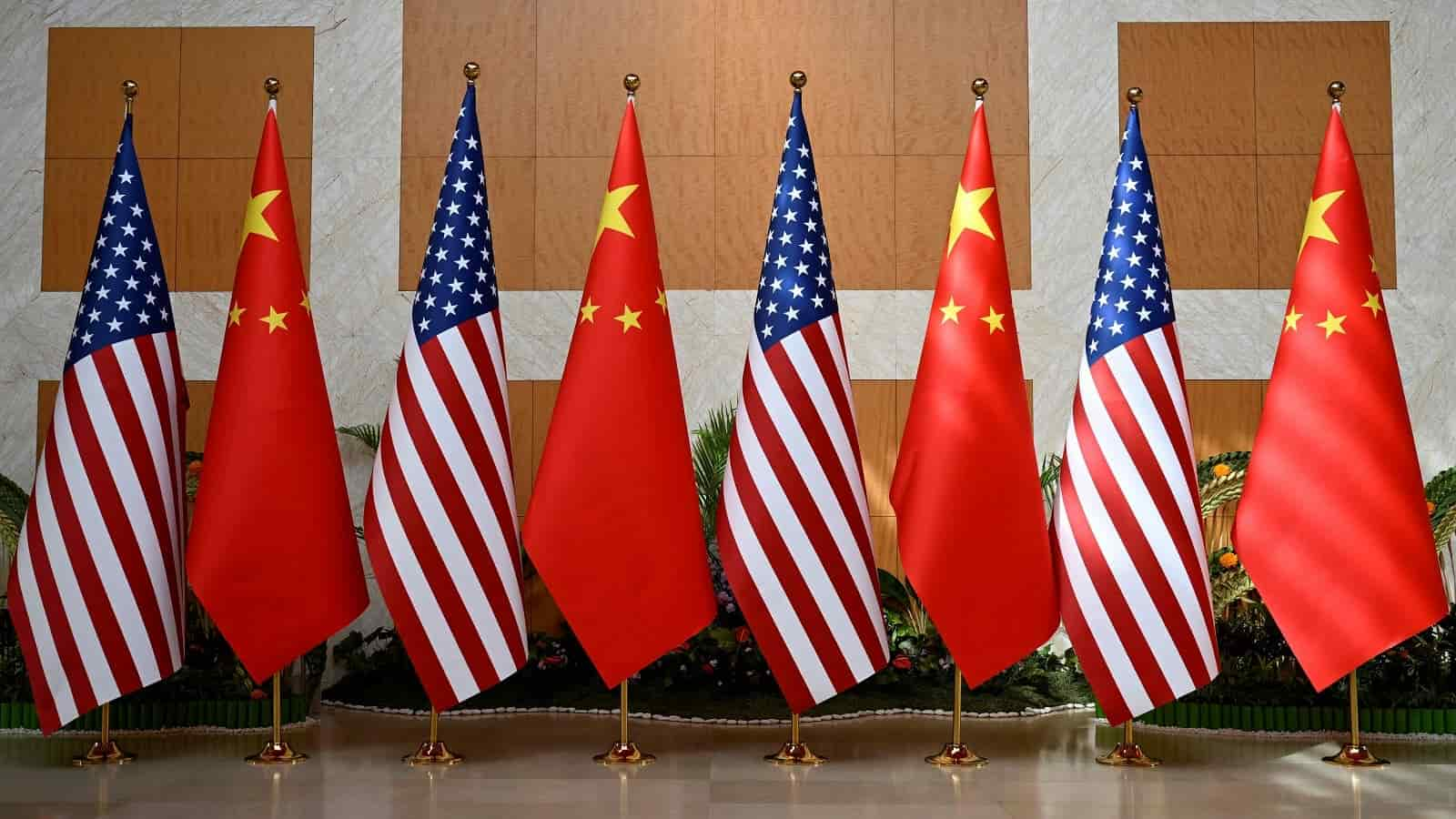
US Defence Bill: China has sharply criticised the United States after Washington passed a new defence law. On Friday, Beijing accused the US of using the new law to make the “China threat” look bigger and to step into China’s internal matters. Chinese officials said the move harms China’s sovereignty and security and damages trust between the two countries.
The National Defence Authorisation Act, also called the NDAA, became law on Thursday after President Donald Trump signed it. China said this law paints a wrong picture and creates more tension. The Chinese foreign ministry said the act “exaggerates the ‘China threat’, interferes in China’s internal affairs and undermines China’s sovereignty, security and development interests”.
BlackSky’s Gen-3 Satellite: Space-Based Intelligence With Fastest-Ever Gen-3 Deployment
China asks US to Change its Approach
Foreign ministry spokesman Guo Jiakun spoke on Friday and made China’s position clear. “China expresses strong dissatisfaction and resolute opposition to this,” he said. He also said China had already raised serious concerns with the US many times before.
Guo asked the US to look at China and their relationship in a calm and fair way. He urged Washington to view China’s growth and ties between the two nations “objectively and rationally”. He also said both sides should work together and follow the important agreements made during the October meeting between the two presidents, reports South China morning post.
He warned that if the US keeps going in the same direction, China will not stay silent. China would take “resolute and forceful measures” to protect its own interests, he said.
What is the New US defence Bill?
The new NDAA includes several rules that upset Beijing. It limits US money going into Chinese technology companies and cuts off federal contracts with Chinese biotech firms. The law also allows up to US$1 billion for the “Taiwan Security Cooperation Initiative”. This funding covers areas like medical supplies, logistics, and “combat casualty care capabilities”.
China strongly opposes any US action linked to Taiwan. Beijing believes Taiwan is part of China and says it will use force if needed to reunite the island. Many countries, including the US, do not see Taiwan as an independent country. Still the Washington opposes using force and continues to sell weapons to Taiwan.
Thales Unveils AI-Powered Sonar 76Nano for Modern Navies
On Friday, China’s Taiwan Affairs Office also criticised the law. It said the US is adding wrong Taiwan-related content to the bill to arm Taiwan and interfere in China’s affairs. “We express our strong dissatisfaction with this action and resolutely oppose it,” TAO spokesman Chen Binhua said.
History of US-China tensions
The NDAA is a yearly law that the US has passed for more than 60 years. It often includes issues beyond defence. This year’s bill came at a sensitive time when the US and China were trying to calm trade tensions after earlier tariff and export control fights.
The bill took months of debate in both the House and the Senate before lawmakers approved it. The final version runs over 3,000 pages and mentions China many times. One key part is the Biosecure Act, which blocks federal support for companies seen as security risks.
Earlier versions of the bill named five Chinese companies directly. These were BGI Genomics, MGI Tech, WuXi Biologics, WuXi AppTec and Complete Genomics. The final law no longer lists them by name. Instead, it tells the US government to create a list of “biotechnology companies of concern” that cannot get federal contracts, loans, or grants.
Another part of the law is called the Foreign Investment Guardrails to Help Thwart China Act. This section targets US investments in Chinese tech that could be used by the military. It also pushes for removing computers and printers made by companies owned or controlled by China.
