

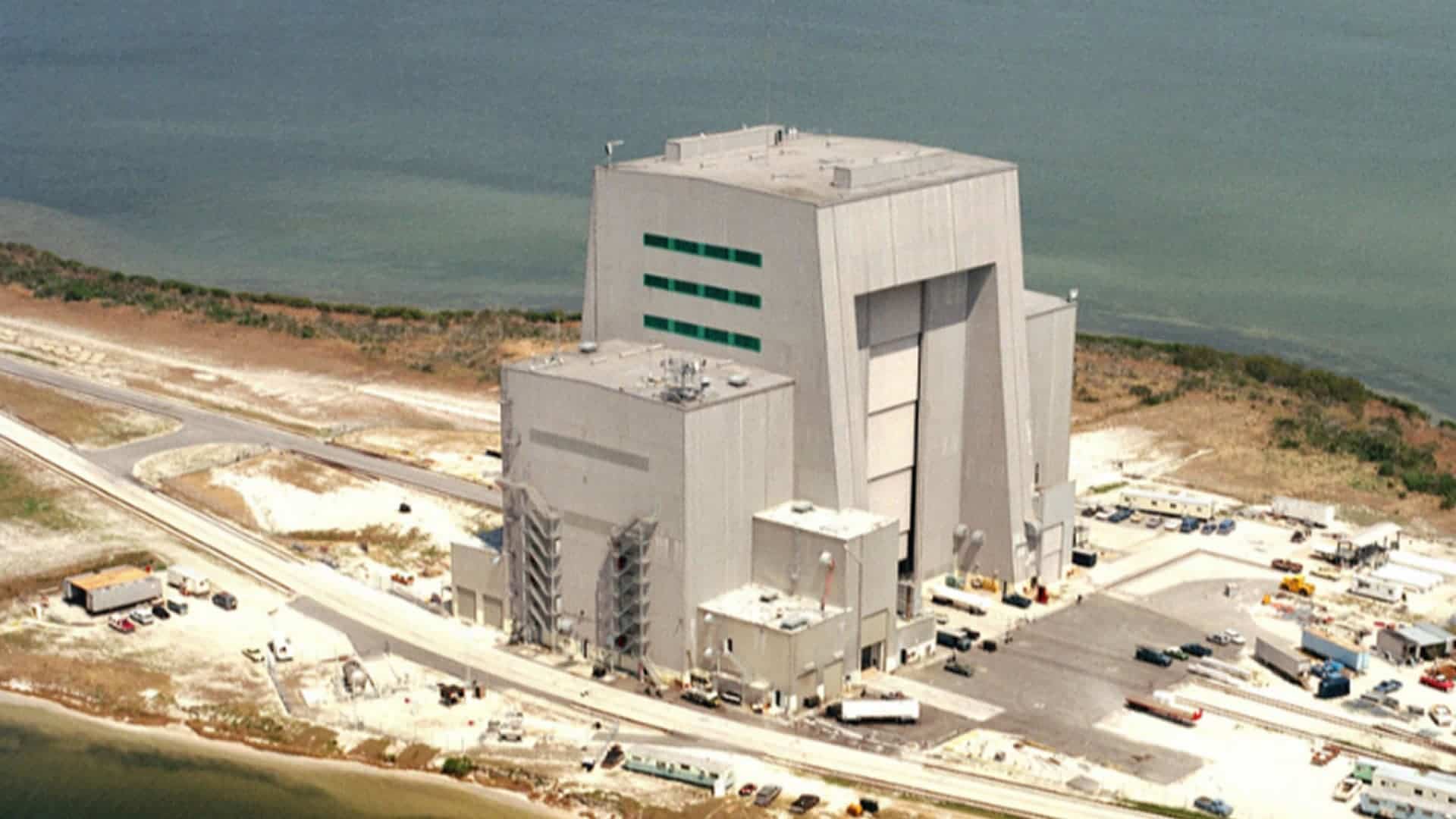
Cape Canaveral Counter-Drone: Cape Canaveral Space Force Station in Florida is preparing for a major security upgrade aimed at stopping small drones. The new counter-drone systems are expected to arrive in the coming weeks. The work is part of a wider U.S. government effort to protect important space launch sites as launch activity keeps growing.
Cape Canaveral is already one of the busiest launch sites in the world. The station and Eastern Range handled 109 orbital rocket launches in 2025. The U.S. Space Force described it as a new world record.
Because so many launches, vehicles and support operations happen there, security has become a bigger concern. The present systems are mainly built to watch for larger aircraft. Small drones flying close to the ground can be much harder to find and track.
Spanish Navy Orders Three SIMBAD RC Missile Defence Systems From MBDA
Why Small Drones are a Problem?
Cape Canaveral has strong air surveillance for normal aircraft. But a small quadcopter can fly low and slow. It can also move around buildings and other objects. That makes it a very different security problem from spotting a normal aircraft.
Space Force Colonel Brian Chatman, who leads Space Launch Delta 45, said the base needs to improve its ability to detect much smaller objects.
“We’re going to see an injection of new capability here in the very short term from JIATF 401, based on the latest and greatest in technology that’s out there,” Space Force Colonel Brian Chatman told Defense One in an interview. “That’ll be integrated in with everything we have today,” he added.
The new equipment will come from Joint Interagency Task Force 401, also known as JIATF 401. It is a Pentagon counter-drone task force that works with the military services to improve protection against small unmanned aircraft.
The exact systems coming to Cape Canaveral haven’t been made public. Possible parts of such a setup can include small-target radar, radio-frequency sensors and cameras that work in normal and infrared light. These systems can help find a drone, identify it and keep track of where it’s moving.
The final part is stopping the drone. Counter-UAS systems can use electronic methods or physical methods depending on the threat and the equipment available.
“While I will not speak to specific capabilities at specific locations, our strategic installations are prioritized for c-UAS fielding,” Lieutenant Colonel Adam Scher, a JIATF 401 spokesperson, told Defense One.
“In this capacity, we work in support of U.S. Northern Command and each of the Services to ensure their installations are protected from the illicit use of drones,” he added. “There is no silver bullet, and we remain focused on accelerating the delivery of innovative capabilities at speed and scale,” Scher told them.
Kenya Navy Explores Saab Surveillance and Defence Technologies for Maritime Security
Beefing up security at Cape Canaveral
The need for better protection is also linked to how important Cape Canaveral has become to the U.S. space program. The station supports military, government and commercial missions. It also has a very high launch rate, which means even a limited disruption could create problems for launch schedules and other operations.
Defense One reported that Cape Canaveral launched 109 rockets in 2025. The same report said Vandenberg Space Force Base in California supported 66 launches.
The White House’s National Space Transportation Policy, issued on August 20, 2026, calls for U.S. launch and reentry ranges to support more than 1,000 launches and reentries every year by 2030. The policy also calls for improvements to launch infrastructure and closer work with commercial companies.
That expected growth means security can’t only depend on older systems. Launch sites need enough surveillance, security teams, emergency support and infrastructure to handle the larger workload.
There are also efforts to make daily security checks faster. Chatman said trucks entering the base can normally take around 10 minutes to inspect. One launch company has offered to pay for an automated scanning system that could make the process much quicker.
“One of the launch service providers came to us and said, ‘With the amount of construction we have going on, we want to pay to put some type of automated scan, like a rapid scan type system” in, Chatman said. “This particular solution we’re looking at, you can drive a vehicle through and in 30 seconds, it can give you a go/no go to reduce from a 10-minute timeline.
“And this particular launch service provider is looking to cut a check to put that capability in because it increases their commitment, but also increases everyone else that has to have that inspection on their trucks on the throughput side of the house.”
A juicy target for drone attacks
Rocket launch sites have many sensitive systems in one place. These include rockets, fuel equipment, power systems and other infrastructure needed before and during a launch.
A drone attack doesn’t need to destroy an entire rocket to cause trouble. Damage to a key piece of equipment could delay launches and force repairs. This means a low-cost drone could potentially create a much bigger problem for a major spaceport.
Poland Nears Italy Helicopter Deal as Local Production Takes Focus
Security experts have also warned that launch facilities can face threats from other directions. A June study from the Mitchell Institute for Aerospace Studies discussed possible attacks on infrastructure around Cape Canaveral. One scenario involved explosions on bridges connecting the cape to the mainland that could put “East Coast launch operations at a halt.”
There is another challenge too. More launches mean more people and more support are needed. A July 2026 Government Accountability Office report found that the Space Force filled about 75% of its documented personnel requirements in fiscal 2025. It also found a 22% shortfall in Air Force support personnel assigned to Space Force needs.
“The Space Force can’t do it alone. It relies heavily on a partnership with the Air Force for base operations support personnel, and so we are advocating across the Air Force for additional bodies, whether it’s firefighters or security forces or civil engineers, to come in and continue support as we have this expansive growth,” Chatman said.
“One big thing that’s changed over time to where we are today is you’re seeing a whole-of-government approach and focus on the launch industry,” he added.
