

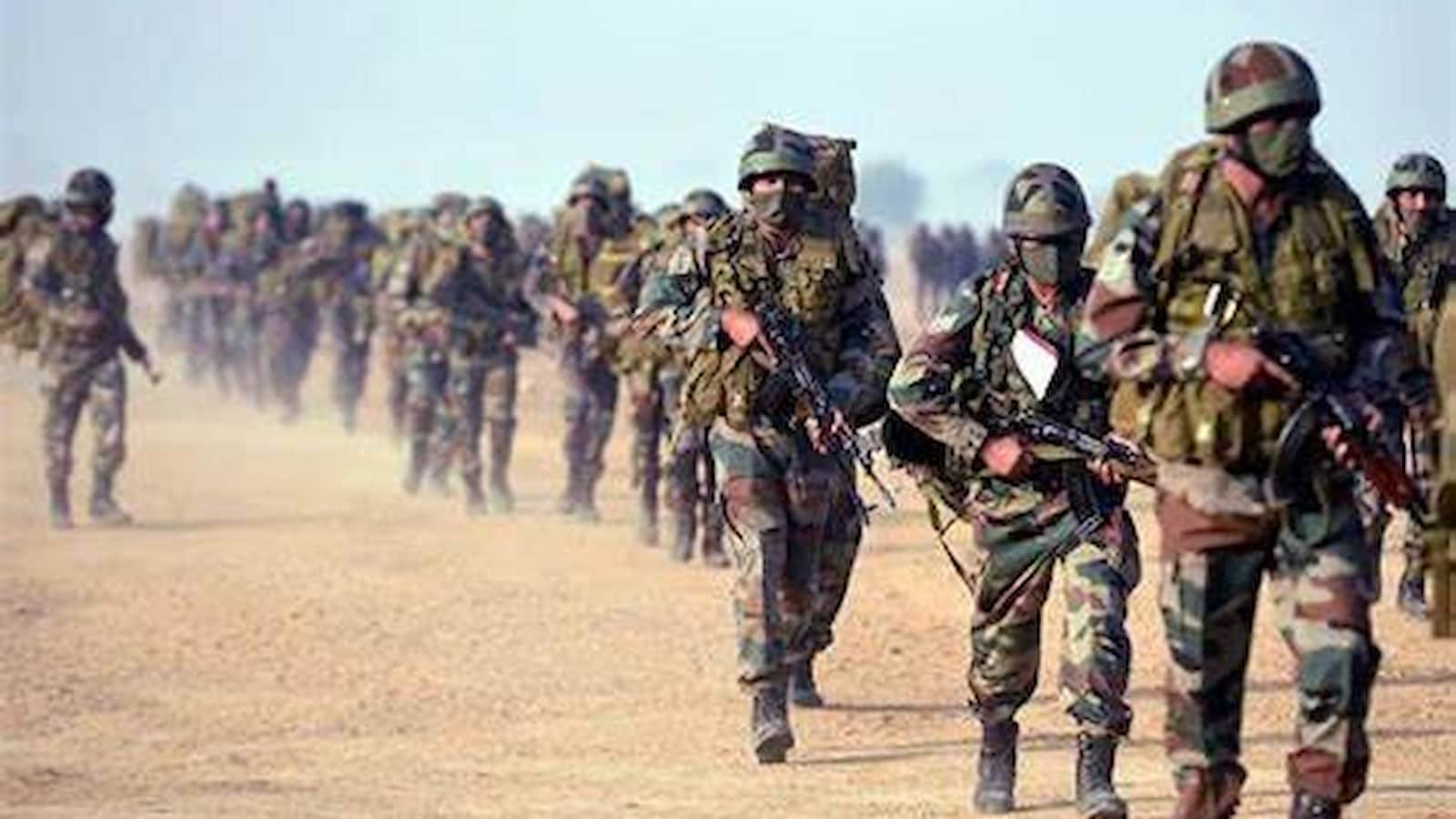
Indian Army Cognitive Electronic Warfare: The Indian Army is putting more attention on a new kind of defence technology called Cognitive Electronic Warfare, or cognitive EW. The big idea is to build systems that can find enemy signals, study them fast, and then block or jam them in real time.
Recent defence reporting says India is moving harder in this direction, while DRDO has also spoken about stronger work in next-generation electronic warfare, spectrum dominance, AI, and self-reliant military technology. This fits with the larger Atmanirbhar Bharat push, where India wants to make more key defence systems at home and depend less on foreign suppliers.
Adani Defence Delivers First Batch of Prahar Light Machine Guns to Indian Army
This matters because war today is not only about tanks, guns, and missiles. A lot of fighting now also happens in the space of signals, sensors, radar, and communication links. That is why many people call it the invisible side of war.
What is Cognitive EW
Cognitive Electronic Warfare is a more advanced form of electronic warfare because it uses AI and ML. Normal EW systems usually work with fixed instructions. They follow the same rule set and react in limited ways. Cognitive EW is different because it is meant to adjust when the situation changes.
That is why armies care about it. A smart system can spot a radar signal, understand what kind of danger it is, and choose a response before a human team finishes discussing it. In a battlefield where every second matters, that kind of speed can change the outcome.
Why India is Interested in this Technology?
India is looking at this seriously because future war will be more technology-heavy. Enemies may use drones, modern radars, secure radios, and other systems that are hard to track and stop with old methods. If a force can break enemy communication, jam sensors, or confuse targeting systems, it can hurt the other side badly without even firing a bullet.
That is one big reason electronic warfare has become so important for armies across the world. India’s own defence planning has also been pushing more AI, ML, and advanced digital systems for future military use.
A cognitive EW system would work inside “the electromagnetic spectrum,” which includes radio and radar signals along with communication networks. First it would detect a signal.
Indian Army Eyes 800-km BrahMos as West Asia Conflicts Reshape Deep-Strike Planning
Then it would study the signal and figure out what it is, what frequency it is using, and whether it is dangerous. After that, the AI part would decide the best move. The final step could be jamming or disrupting the enemy system. So the basic chain is detection, analysis, decision, and electronic attack. That is the simple version, but it shows why this technology is seen as a major step ahead.
India’s Existing EW Strength and DRDO’s Role
India is not starting from zero in this field. It already has experience with systems like Samyukta, which is a mobile integrated electronic warfare system for the Army. Defence reporting and industry information also point to Indian work in high-altitude EW use, drone support, counter-jamming, secure communications, and wider electronic warfare programs. This base gives India something to build on as it moves toward smarter and more adaptive systems.
DRDO has a major part in this story. Official and recent reporting show DRDO is focusing on next-generation electronic warfare, AI and ML-linked capability growth, and more indigenous defence development. That matches the goal in your draft about building AI-based EW algorithms, cognitive jammers, open architecture systems, and home-grown hardware and software.
What Challenges Remain?
If cognitive EW works the way India hopes, it could give Indian forces a strong advantage in dangerous areas and fast-moving combat zones. It can help troops make decisions quicker. It can quietly shut down or weaken enemy systems.
It can also improve survival for soldiers by reducing the need to expose themselves while dealing with threats. Another big benefit is that it can support better teamwork between the Army, Navy, and Air Force, because modern war depends on sharing and controlling information quickly.
This is also part of a bigger global race. Countries like the United States and China are investing heavily in AI-led electronic warfare, smarter jamming systems, and more automated defence networks.
