

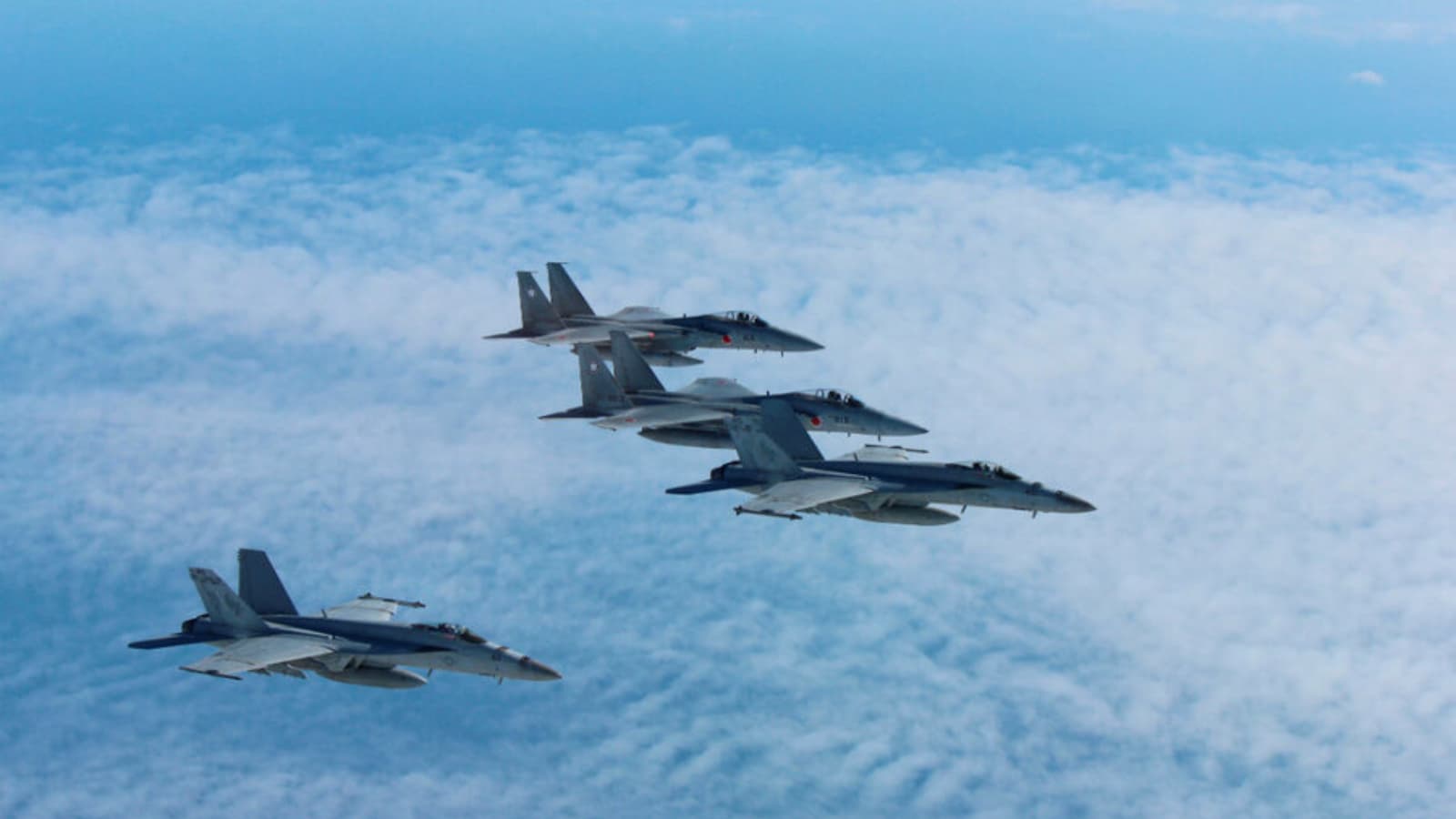
Indian Aerospace Power: The Indian Air Force (IAF) is planning a big change. By the year 2047, they want to become a strong aerospace power. This means they will not just focus on fighter jets but also on space. Air Chief Marshal AP Singh shared this plan at the Chanakya Dialogues Conclave. He said, “We would like to be an aerospace power by 2047… We have already taken steps towards educating our people to be more space-oriented.”
This plan is not just about flying high. It is about controlling both the sky and space. Wars are changing. Now, countries use satellites for spying, watching, and hitting targets with precision. The IAF wants to be ready for this. They want to make sure India stays strong and can protect itself.
White House Tensions with Ukraine Heighten Urgency for EU Defence Summit in London
What does aerospace power mean?
It means using both air and space together. Fighter jets, missiles, drones, and satellites will work as one team. This will create a powerful system for fighting wars. Air Chief Marshal Singh explained that speed, reach, flexibility, and precision are very important. These things will help India stay ahead in military power.
The IAF is already working on this. They are always ready to act. Their fighter jets, radars, and missile systems are on alert 24 hours a day. If anyone tries to enter Indian airspace without permission, the IAF responds quickly. For example, in 1988, during the Maldives crisis, the IAF sent paratroopers very fast. This showed how air power can make a big difference.
The IAF is also going to space. According to Republic World, they are helping with India’s first manned space mission, called Gaganyaan. The four astronauts for this mission are all IAF officers. The IAF is also helping to set safety rules for the mission. Group Captain Shubhanshu Shukla, an IAF officer, has been chosen as the main astronaut for ISRO’s Gaganyaan and Axiom Mission 4 (Ax-4). He will fly with astronauts from NASA, ESA, and Hungary. This is a big moment for India. An IAF officer will represent India in an international space mission.
Indian Aerospace Power: What will the IAF look like in 2047?
Air Chief Marshal Singh gave some ideas:
- Fleet upgrade: By 2047, the IAF will have only advanced fighter jets. These will be 4.5-generation or higher. This means jets like Rafale, upgraded Su-30s, and Indian-made stealth fighters will be in the sky.
- Seamless warfare: The IAF will work closely with the army, navy, and space forces. They will share information in real-time and attack together.
- Automation and AI: The IAF will use artificial intelligence (AI) and automation. This will help them make quick decisions and stay ahead in battles.
Coimbatore: Defence Expo Explores AI’s Growing Role in Modern Security and Career Opportunities
The IAF is changing. They are moving from just controlling the sky to controlling both the sky and space. By 2047, India will not just defend its airspace but will also lead in future wars. With space missions, advanced jets, and new technology, the IAF is making India a global leader in aerospace.
As India prepares to celebrate 100 years of independence, the IAF is getting ready for a future where wars will not just happen in the sky but also in space. They are making sure India stays strong and safe.
