

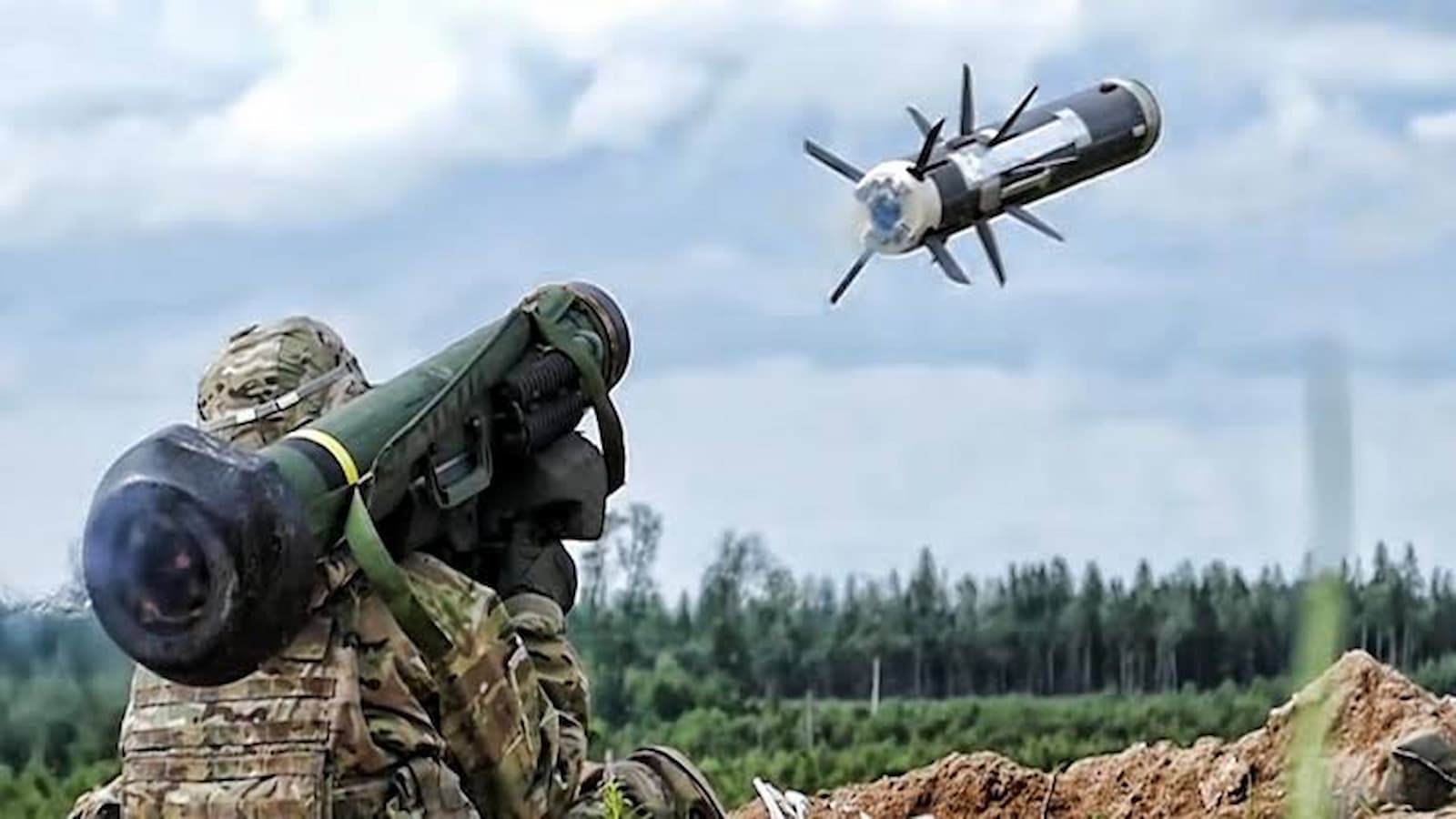
DRDO’s MPATGM Missile: The MPATGM which is also known as the Man-Portable Anti-Tank Guided Missile, is India’s own shoulder-launched weapon made to destroy modern tanks and heavy armoured vehicles. It was developed by the Defence Research & Development Organisation (DRDO) and will soon be used by the Indian Army. The missile is part of the government’s “Atmanirbhar Bharat” plan .
India and US Sign Fresh 10-Year Defence Cooperation Framework
Why India Needed MPATGM?
India felt the need for a modern anti-tank missile during border standoffs and conflicts where soldiers had to face enemy tanks in tough areas like mountains and deserts. The Army and DRDO then decided to make a new system that was light, easy to carry, and could hit the target directly without manual guidance. This idea led to the MPATGM project, which got approval in 2015. Bharat Dynamics Limited (BDL) in Telangana became the main production agency for the missile.
The missile was designed to be portable and powerful. The launch unit and missile together weigh under 30 kg, which allows a two-person team to use it easily. It carries a tandem HEAT warhead that can defeat strong explosive reactive armour (ERA) and even the thick metal of battle tanks. The missile can travel up to about 4,000 metres and can attack a target as close as 200 metres.
The missile uses an Imaging Infra-Red (IIR) seeker to guide itself. This gives it a “fire and forget” feature. Once a soldier fires it, the missile follows and hits the target on its own. It can strike straight or from above, which makes it better than older missiles. Tests proved it works well in both day and night, even in mountains and city areas.
Tests and Progress
In April 2024, DRDO completed warhead flight-trials of the MPATGM at the Pokhran Field Firing Range in Rajasthan. During the test, the tandem warhead showed that it could pierce through the armour of modern battle tanks. After the success of these trials, experts declared that the missile’s technology development phase was complete.
According to officials, the missile is now moving toward final user evaluation trials, and the Indian Army could get full operational clearance by 2026. Once approved, production will increase at Bharat Dynamics Limited and its partner firms so that the missile can be supplied in large numbers to Army units.
Why is MPATGM Important?
For the Indian Army, MPATGM is a big step forward. It will replace old second-generation missiles like the French MILAN and the Soviet 9M113 Konkurs. These older systems did not have modern “fire-and-forget” abilities. The new missile gives Indian soldiers the power to take down enemy tanks quickly, even in rough terrain like Ladakh.
It also supports the Atmanirbhar Bharat vision by promoting Indian-made defence systems. Making and using the MPATGM in India reduces imports and boosts domestic manufacturing.
Lucknow to Host India’s First Landlocked Naval Museum Featuring INS Gomati
The final user trials will test how well the missile performs in extreme weather and terrain, such as cold conditions in Ladakh and combat situations in cities. After these tests, large-scale production may start for induction in 2026–27. The Army will then replace imported anti-tank systems with MPATGM, increasing the use of Indian-made weapons.
