
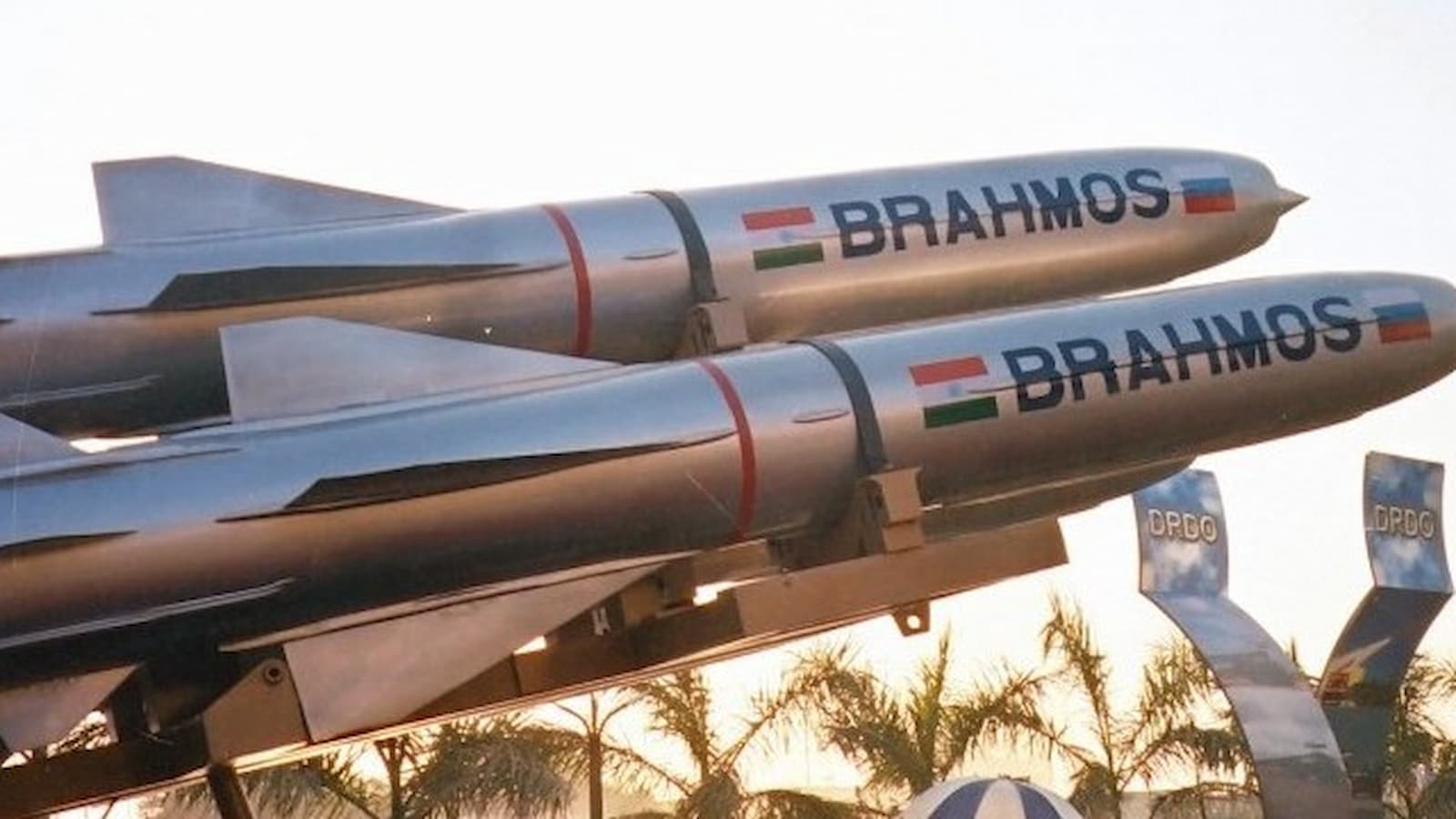
Fourth BrahMos Missile: India is on its way to send the Philippines the fourth “battery” of land-based BrahMos supersonic cruise missiles today. This is a huge boost for defence exports, especially since tensions are rising because of China’s claims in the South China Sea.
As per Hindustan Times, a fourth BrahMos missile is on its way to Manila as part of the 375 million-dollar deal that the island nation and its partners signed in 2022. Three “batteries” of missiles have already been given to the country. Each battery has four launchers, each with three 290-kilometer-range missiles. Each launcher is on a mobile base so that the conventional deterrent can last longer. As the weapon moves faster than sound, it is very hard for ballistic missile defense (BMD) systems on land or at sea to stop it.
Thanks to the BrahMos Philippines deal, India’s defense exports have already reached ₹21083 crores in 2023–204, which is a huge 32.5% increase from the previous fiscal year. Since BrahMos has worked in the past, India is likely to get more orders for supersonic weapons soon.
India’s BrahMos Missile Emerges as Key Defense Export: How Important are they?
India has now exported more missiles than any other country. The Narendra Modi government also wants to set up a joint venture between Mazagon Dockyards Limited and the French Naval Group so that Scorpene-class diesel-electric submarines can be made in Mumbai and sent to countries like Indonesia and Malaysia. The Chief of Defence Staff, Gen.
Anil Chauhan, is currently in France to meet with the Naval Group and the government of Emmanuel Macron to discuss how the French and Indian supply chains can work together to help India make high-tech conventional and non-conventional sub-surface platforms as part of the Aatmanirbhar Bharat program.
It is known that the Indian CDS will go to the French submarine base at Brest and maybe even Toulouse to try to strengthen defense cooperation between the two countries. The French Naval Group is already in talks with MDL about building India three more Kalvari (modified Scorpene) class submarines.
While the P-5 powers use conventionally armed nuclear-powered attack submarines (SSN) for intimidation and blocking access, India is still thinking about what it can do. Along with underwater armed drones, other choices for long-term maritime security include making SSNs or looking into lithium batteries, propulsion systems that don’t need air, or regular diesel-electric submarines. These ideas should become more concrete during Modi 3.0.
