
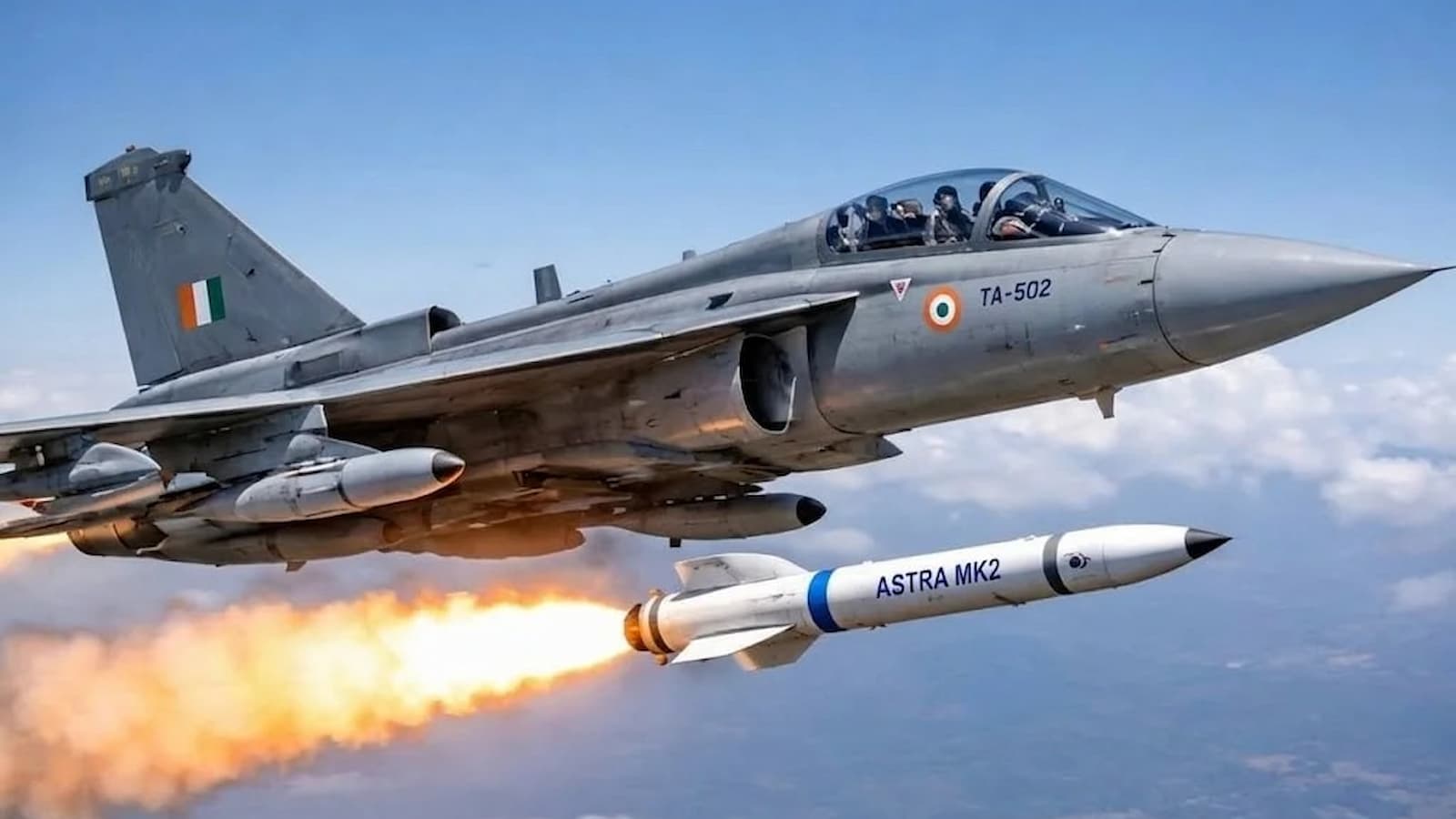
Astra Mk1 And Mk2: The Indian Air Force is preparing to bring its home-made Astra air-to-air missiles to the Rafale fighter. According to recent defence reporting, integration trials for the Astra Mk1 and the newer Astra Mk2 are expected to begin around 2028. The work is being planned with technical support from French companies Dassault Aviation and Thales.
India already operates 36 Rafale fighter aircraft. The jets currently use weapons such as the Meteor and MICA air-to-air missiles. The new plan could give the IAF another weapon option that has been developed in India. It is also part of the wider effort to reduce dependence on foreign weapons and build more defence technology inside the country.
Norway Orders 20 Patria 6×6 Vehicles With Kongsberg Weapon Stations
What Astra Mk1 And Mk2 Can Do?
Astra is India’s indigenous Beyond Visual Range Air-to-Air Missile, or BVRAAM. It has been developed by DRDO with support from the IAF. Astra Mk1 is already in production and is officially listed with a range of around 80 to 110 km. It can fly at up to Mach 4.5 and uses inertial guidance, mid-course updates and active radar guidance during the final part of the flight.
Astra Mk2 is meant to be a more advanced version. DRDO material has described a range of about 160 km for the Mk2, with a dual-pulse solid-fuel rocket motor helping it achieve the longer range. This would give Indian fighters a longer reach against enemy aircraft.
Dassault and Thales are Important
Putting an Indian missile on a French fighter is not as simple as attaching the missile under the aircraft. The missile must work with the fighter’s radar, computers, software, communication systems and other avionics.
This is where Dassault Aviation and Thales become important. Their involvement can help connect the Astra missile with the Rafale’s onboard systems. The Rafale uses sophisticated equipment including the Thales RBE2 AESA radar. Working directly with the aircraft makers can also make the integration process smoother and reduce technical problems.
How The Rafale Integration Could Be Tested
The programme is expected to move through several testing stages before the missile is cleared for use. Engineers would first use computer-based simulations to check software, aircraft compatibility and other technical issues. After that, the missile can be carried on the Rafale during flight without being fired.
Heron UAV Fleet Upgrade: Why Is The Indian Army Repairing Old Drones?
Further captive-carry testing would check how the aircraft and missile communicate during flight. Radar links, targeting information and electronic systems would also need to work correctly. Live firing trials would come later once the earlier tests are completed successfully.
India has already integrated Astra Mk1 with the Su-30MKI and the government has said it will be integrated with other fighter aircraft in phases. The Rafale programme would take this indigenous missile one step further.
