

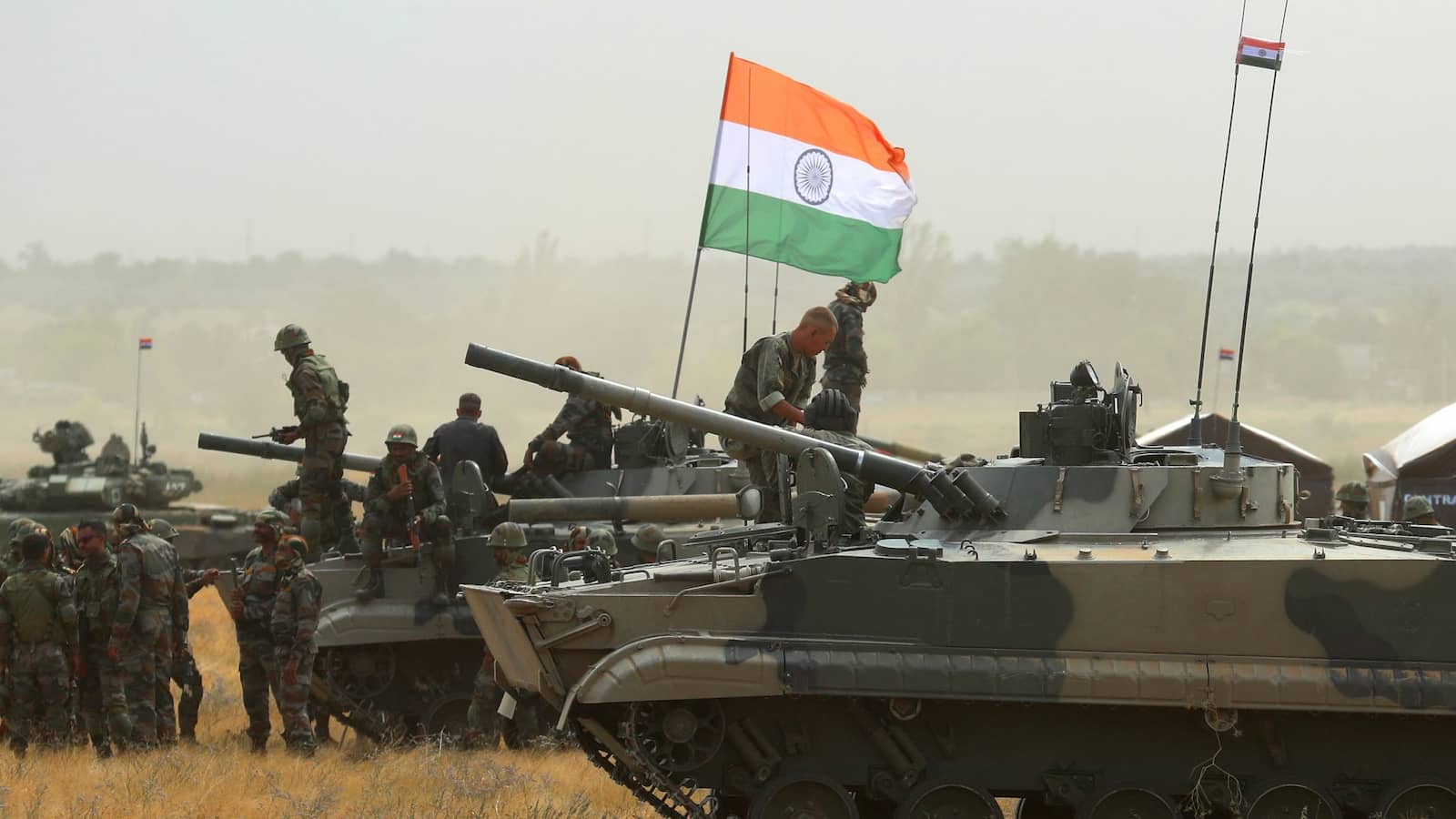
Atmanirbhar Bharat India achievement: India’s defence sector achieved remarkable milestones in 2024, underscoring its commitment to the Atmanirbhar Bharat initiative. By integrating indigenous innovations and fostering global partnerships, India has taken significant strides in bolstering its military capabilities.
In March, the Defence Research and Development Organisation (DRDO) successfully conducted a flight test of the Agni-5 missile, showcasing India’s advanced missile technology. This marked India’s entry into an elite club of nations possessing Multiple Independently Targetable Re-entry Vehicle (MIRV) technology. The Agni-5 can hit multiple targets with precision, significantly enhancing India’s deterrence capabilities.
India signed a ₹32,000 crore agreement with the US to procure 31 Predator drones, which include 15 Sea Guardian drones for the Navy and eight Sky Guardian drones each for the Army and Air Force. These drones are designed to boost India’s surveillance and intelligence-gathering capacity. The deal also includes setting up a local drone maintenance facility. “These ‘hunter-killer’ drones will improve India’s surveillance and intelligence capabilities,” an official stated.
HFCL Boosts Defense Production for Armed Forces and Global Exports
In October, India inaugurated its first private military aircraft plant in Vadodara under the Tata-Airbus collaboration. The facility will produce 40 C-295 transport aircraft for the Indian Air Force as part of a ₹21,935 crore contract. The versatile C-295 aircraft will serve multiple roles, including transport, medical evacuation, and maritime patrol, further enhancing operational flexibility.
In December, the Defence Acquisition Council (DAC) chaired by Defence Minister Rajnath Singh approved defence proposals worth ₹21,772 crore. These include advanced water jet fast attack crafts and interceptor crafts for the Navy, electronic warfare systems for Su-30 MKI fighter jets, and six advanced helicopters for the Coast Guard.
These initiatives aim to create a modernized, efficient defence infrastructure, particularly for anti-piracy missions near island territories.
The Indian Army launched the Signals Technology Evaluation and Adaptation Group (STEAG) in 2024 to focus on cutting-edge technologies like AI, 5G, and quantum computing.“STEAG will be the nursery for nurturing and developing tailored technologies spanning the complete spectrum of wired and wireless systems,” an Army official explained. The unit is designed to foster collaboration with academia and industry, making it a premier hub for defence technology innovation.
India’s push for indigenous arms production saw the induction of 550 ‘Asmi’ machine pistols into the Army’s Northern Command.
“The ‘Asmi’ machine pistol is a robust, compact, and reliable weapon designed for close-quarter battles and specialized operations. Its unique semi-bullpup design allows for single-handed operation both as a pistol and submachine gun,” the Army’s Additional Directorate General of Public Information stated.
Looking Ahead to 2025
India’s naval and aerial power is set to grow further with plans to procure 26 naval Rafale jets and three additional Scorpene submarines.
Navy Chief Admiral Dinesh K Tripathi shared, “62 ships and a submarine are currently under construction within the country as part of efforts to boost its naval power. We have redoubled efforts to include niche technologies into the force.”
As India forges ahead, these advancements underline its commitment to becoming a self-reliant and technologically advanced military power.
