

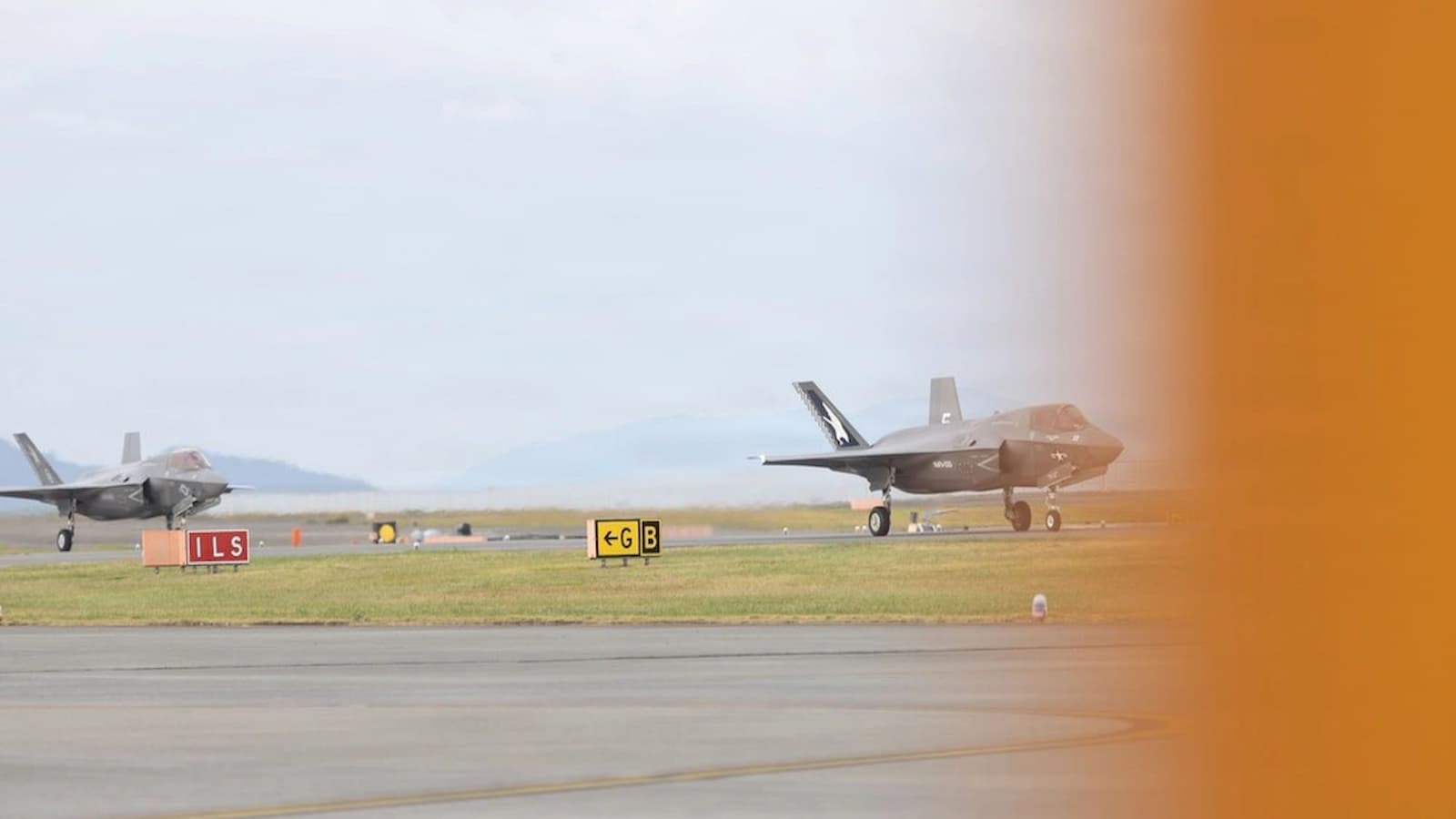
U.S. F-35B Squadron to Japan: The U.S. Marine Corps has sent Marine Fighter Attack Squadron 533, known as the “Hawks,” to Japan as part of its continuing military presence in the Indo-Pacific.
VMFA-533 is based at Marine Corps Air Station Beaufort in South Carolina. The squadron has moved to Marine Corps Air Station Iwakuni, where it will join Marine Aircraft Group 12 under the 1st Marine Aircraft Wing. The unit operates the F-35B Lightning II, a fifth-generation fighter built for short takeoffs and vertical landings. The Marine Corps says VMFA-533 began receiving its first F-35Bs in October 2024 as it moved away from the older F/A-18 Hornet.
What India-Uzbekistan Strategic Partnership Means For Defence And Trade
Hawks Take Over the Japan Rotation
The Japan mission is being carried out under the Marine Corps’ Unit Deployment Program. Through this program, U.S.-based Marine units are regularly sent to the Indo-Pacific so they can train and operate in the region.
VMFA-533 will replace VMFA-232 in the rotating role at Iwakuni. VMFA-232 has been operating from Iwakuni during 2026 and was still taking part in regional training activities in August. The Marine Corps has described these deployments as a way to keep aviation forces ready while units rotate in and out of the region.
For the Hawks, the deployment also brings the F-35B into another operational setting. The aircraft combines stealth with advanced sensors and can operate from locations where a normal fighter may not be able to use a long runway. The Marine Corps has long used Iwakuni as an important base for F-35B operations in the western Pacific.
Deployment Importance
During their time in Japan, the Marines will carry out aviation missions and keep the squadron prepared for possible operations across the region.
Anti UAV Defence System Market to Reach US$ 7.03 Billion by 2035
The Marine Corps wants its aviation units to be able to work from naval ships and expeditionary bases when needed. This gives commanders more options for moving aircraft and supporting forces in different locations. The Unit Deployment Program also gives Marines from the continental United States real experience in the Indo-Pacific. Deployments can overlap as one unit arrives while another prepares to leave. This helps maintain a regular U.S. military presence without keeping the same squadron overseas all the time.
The deployment is also tied to the wider U.S.-Japan security relationship. American forces stationed in Japan are a major part of Washington’s commitment under the U.S.-Japan Treaty of Mutual Cooperation and Security. The Marine Corps says these rotations help strengthen readiness and support stability in the region.
VMFA-533 has a long history of deployments in the Pacific and other parts of the world. After ending F/A-18 flight operations in 2023, the squadron was redesignated VMFA-533 and began its transition to the F-35B. Its latest deployment shows the Hawks are now entering a new stage with the Marine Corps’ fifth-generation fighter force.
