

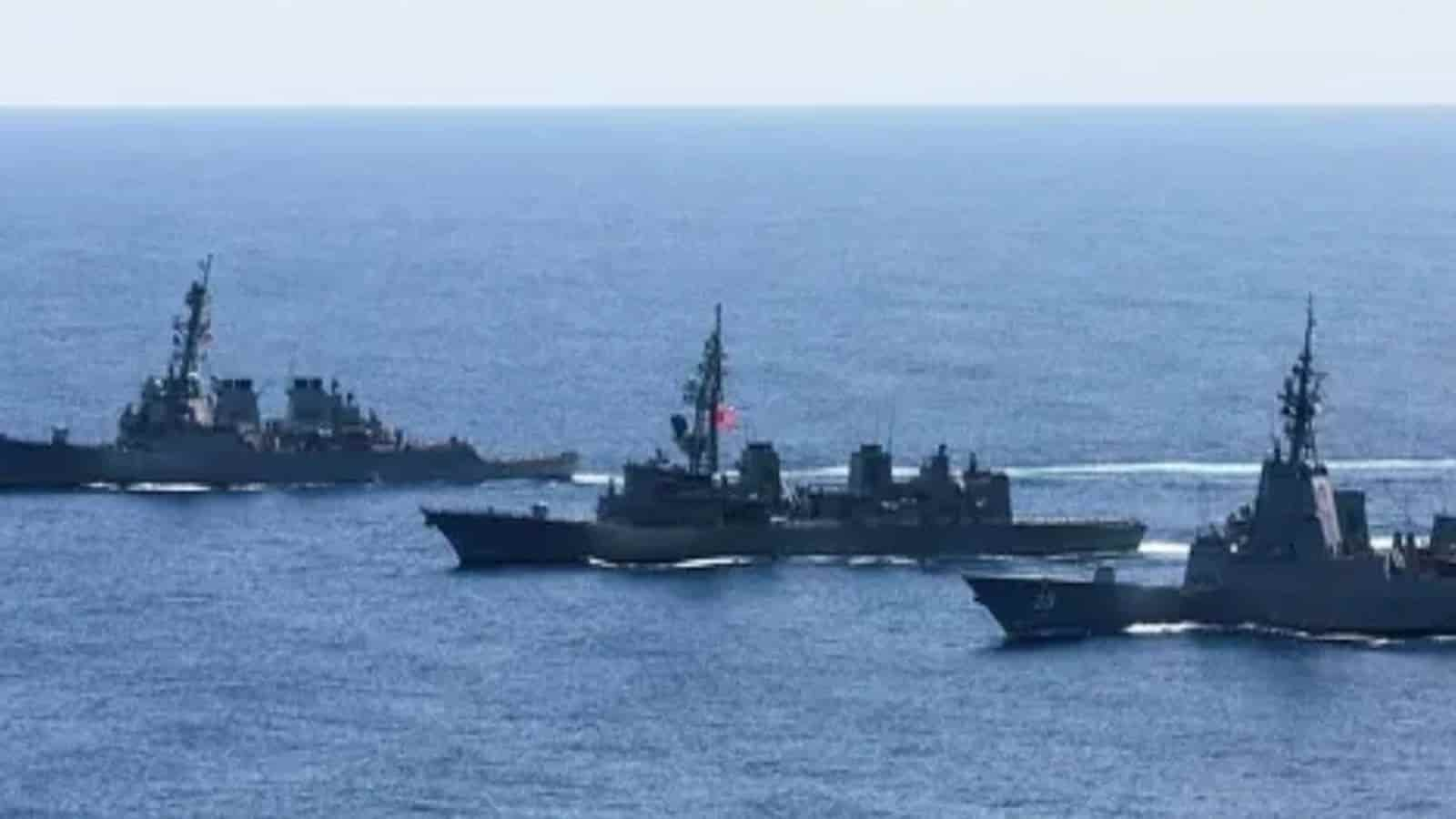
Australia looking Foreign Shipbuilders: Australia has contacted several foreign shipbuilders in an attempt to acquire general-purpose frigates quickly as part of Project Sea 3000.
According to the department, on May 24, the government issued information requests to shipbuilders in Germany, Japan, South Korea, and Spain. However, a government representative declined to disclose more information “due to [the] commercial, procurement, and probity processes while the evaluation is underway.”
The “Enhanced Lethality Surface Combatant Fleet” government review, which was released in February, suggested replacing eight Anzac-class frigates with eleven general-purpose frigates. To expedite the process, the first three would be constructed abroad, and the remaining ones in Western Australia.
According to Defense News, Germany’s MEKO A-200, Japan’s version 30FFM, South Korea’s FFX from the second and third batches, and Spain’s Alfa 3000 were considered competitors in the review. It doesn’t explain why, but it lists the two FFX batches as a single platform type.
According to reports, the shipbuilders were given four weeks to reply to the initial request and three weeks to outline how further frigates could be constructed in Australia.
Australian Army Opens Doors to Foreign Recruits to Address Recruitment Shortage
The first ship built abroad is scheduled to be commissioned in 2030, with selection anticipated to occur the following year. The Australian-built fourth through sixth vessels will share the same baseline. The design of the seventh through eleventh frigates is still up for debate.
The fleet of surface combatants of the Royal Australian Navy will consist of just nine hulls by 2026, highlighting the impending capability gap until new frigates arrive.
When Defense News contacted shipbuilders, they refused to comment in depth on Australia’s procurement initiative. ThyssenKrupp Marine Systems, a German corporation, said it “participated in the tender,” but it also stated that “we’ll not comment on further details of the ongoing process.”
Hyundai Heavy Industries, SK Oceanplant, and Hanwha Ocean are currently building six Ulsan-class FFX-III warships for the South Korean Navy. Eight ships of the Daegu class, designated FFX-II, were completed last year. A representative for Hyundai Heavy Industries attested to receiving the information request.
“HD Hyundai Heavy Industries has great competitiveness with its rich experience in warship building, such as [research and development] and the first ship of the latest Ulsan-class frigate,” the spokesperson said. “This will be an opportunity for HHI to show how they approach warship orders that fit the situation of each country.”
Australia’s chief of naval capabilities, Rear Adm. Stephen Hughes, stated at the Combined Naval Event conference in the United Kingdom on May 23 that the nation is utilizing the designs of current frigates to expedite the introduction of the boats into the fleet.
Neutralizing Two Russian Aircraft: Ukrainian Ministry of Defense states downing a Su-34 is easy
However, Australian frigates that are identical to the parent ships mentioned above present possible challenges because the original customers chose some of their systems, weapons, and sensors and may not be familiar to the Royal Australian Navy. Exemplars of these ships have been built for Egypt, Japan, Saudi Arabia, and South Korea. Interestingly, those ships lack Saab’s 9LB combat management system, which the Australian Navy utilizes throughout its fleet. Similarly, the radars produced in Australia by CEA Technologies are not included either.
“Whatever we choose, whatever standard we go with, we’re going to adopt that. We’re going to have discipline around that capability,” Hughes said, describing the acquisition process as “an opportunity, not a risk.”
“The risk is we don’t choose wisely and we don’t understand the designs.”
