

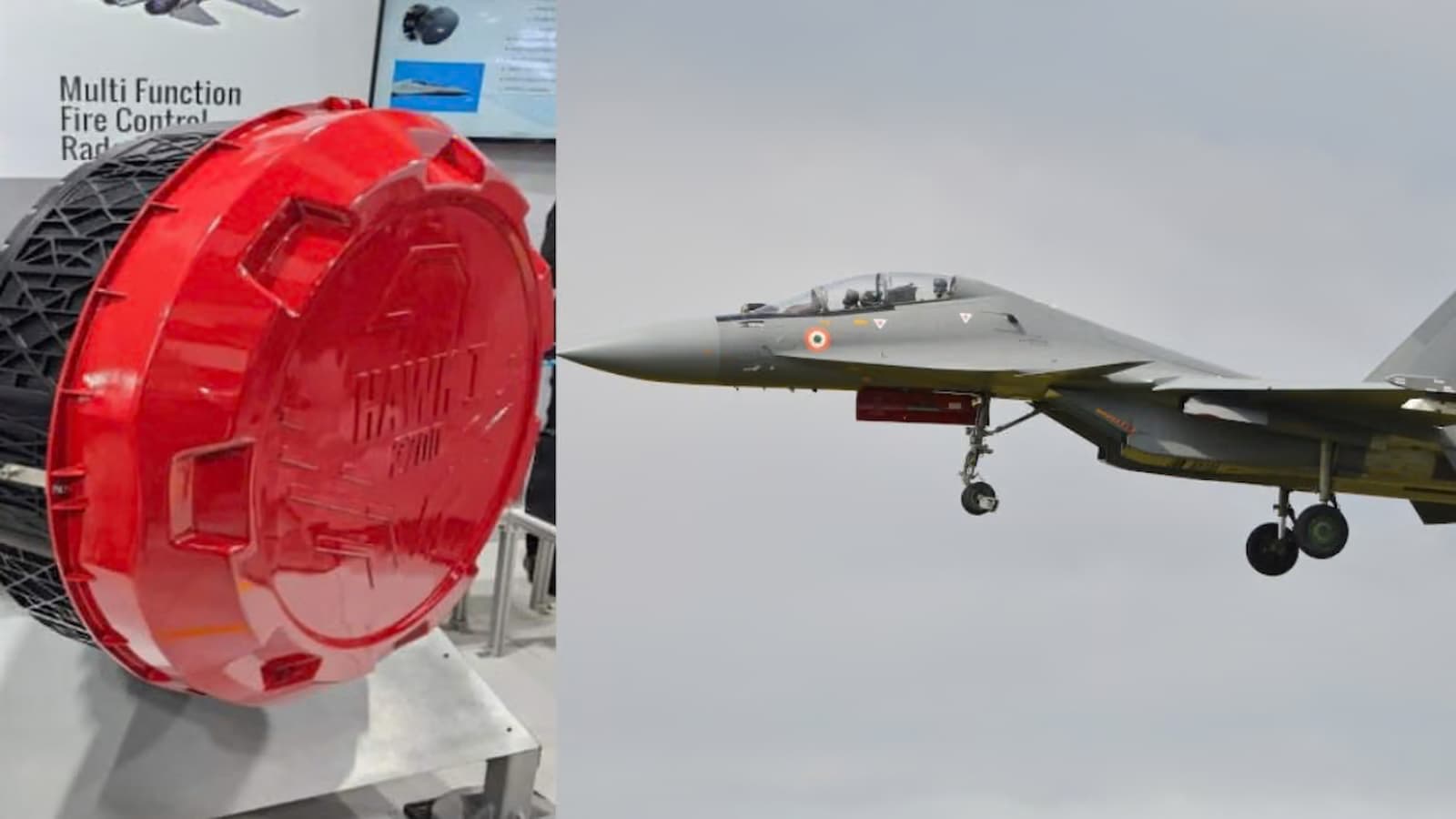
Hawk-I-2700 Radar Software Delays: Indian defence company Data Patterns has completed the hardware development of its Hawk-I-2700 Active Electronically Scanned Array (AESA) radar. But the project is facing delays because the software needed to operate the radar hasn’t been fully developed and integrated yet.
The radar is being considered for India’s upcoming ‘Super Sukhoi’ upgrade programme for the Indian Air Force’s (IAF) Su-30MKI fighter jets. The latest update came during Data Patterns’ Q2 FY2027 earnings call on November 9, where the company’s management confirmed that the hardware was ready but software integration was still progressing slowly.
Türkiye Offers Saudi Arabia Defence Partnership Backed by $120 Billion Project Portfolio
Software Delays Push Data Patterns To Seek DRDO And Russian Support
The main problem started when Data Patterns planned to get software support from an outside company. But that arrangement didn’t work out as expected. As a result, the company now needs another way to develop the software and connect it with the radar hardware.
Data Patterns Chairman and Managing Director S. Rangarajan explained the situation during the company’s July 2026 earnings call. He said, “Original concept was we get the software from somebody. It didn’t work out, but the hardware we went ahead and developed is world-class.”
To solve this problem, the company is now holding discussions with the Defence Research and Development Organisation (DRDO) and Russian original equipment manufacturers (OEMs). Their support could help make the new radar work properly with the Su-30MKI’s existing Russian-designed avionics and other onboard systems.
The company is also working on its own airborne software. It has started using Unmanned Aerial Vehicles (UAVs) as test platforms. This will allow engineers to check the software during real flight conditions before moving towards testing on fighter aircraft.
Hawk-I-2700 Radar: Main Features And Capabilities
First displayed at Aero India 2025, the Hawk-I-2700 is an indigenous X-band AESA radar developed in India. It uses modern Gallium Nitride (GaN) technology, which helps improve power efficiency and heat management.
- Radar Modules: Around 2,700 Transmit/Receive Modules (TRMs).
- Technology: Gallium Nitride (GaN).
- Peak Power Output: Approximately 25.28 kilowatts.
- Operating Frequency: 8-12 GHz (X-band).
- Maximum Surveillance Range: Up to 350 km.
- Search Range: Around 250 km.
- Tracking Range: Around 200 km.
The radar can also detect and follow multiple targets at the same time. Its electronic attack features are designed to help deal with enemy radar signals in difficult combat conditions. These are published system specifications and haven’t yet been confirmed through operational trials on the Su-30MKI.
Indian Private-Made Short-Range Missile Completes Second Successful Test in Odisha
Competition With DRDO’s Virupaksha Radar
The Hawk-I-2700 is also competing in India’s efforts to develop an indigenous radar for the Su-30MKI upgrade. DRDO is separately developing the Virupaksha AESA radar for the same fighter aircraft.
Both radars are being developed as possible replacements for the older Russian-made N011M Bars radar. The new systems aim to improve the aircraft’s ability to detect and track enemy aircraft at longer distances. This will also improve its beyond-visual-range (BVR) combat capabilities.
However, Data Patterns still needs to complete the software work before its radar can move to the next stage. Once the integration problem is solved, the company hopes to get an IAF Su-30MKI aircraft for flight testing and final checks. The radar will also need to pass the required trials and certification before it can be considered for operational use.
