
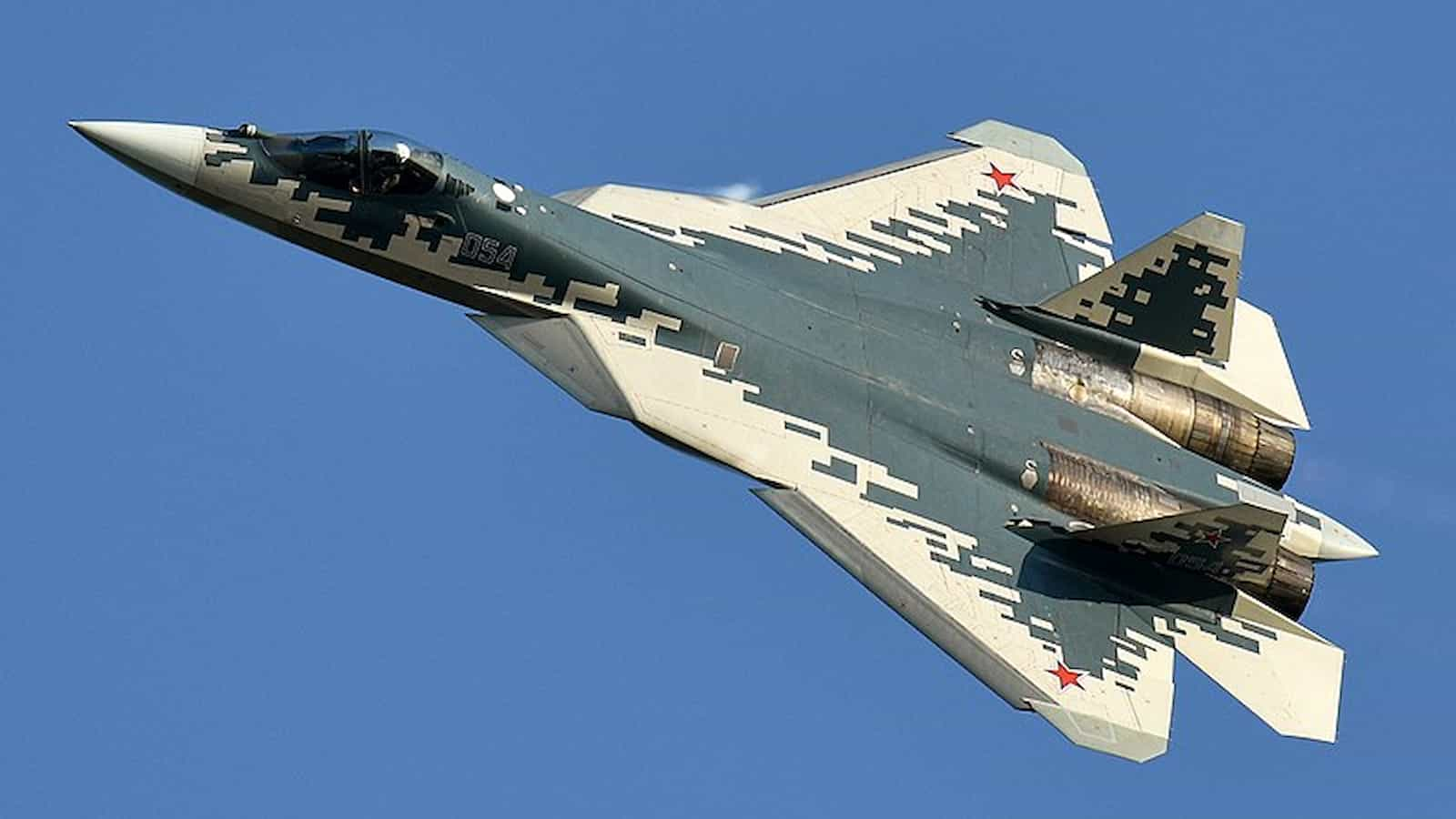
India’s Su-57M1 Fighter Deal: India’s fighter fleet modernisation debate has entered a new phase. With squadron strength under pressure, regional air power competition intensifying, and the indigenous Advanced Medium Combat Aircraft (AMCA) still years away from induction, renewed discussion around Russia’s upgraded Su-57M1 stealth fighter is gaining momentum.
Moscow has reportedly revived its offer to India with an enhanced package that includes technology transfer, local production possibilities, and a more advanced version of the Su-57 platform. If New Delhi wants a near-term fifth-generation fighter capability, the Su-57M1 could emerge as a serious interim option.
Why the Su-57M1 Is Back in Focus?
India previously exited the FGFA (Fifth Generation Fighter Aircraft) programme linked to the original Su-57 due to concerns over cost, stealth maturity, engines, and workshare expectations. However, the newer Su-57M1 is being positioned as a significantly improved variant rather than a rebranded old proposal.

The timing matters. The Indian Air Force needs more frontline fighters, while China continues to expand deployment of advanced aircraft such as the J-20. That has reopened the question: should India wait for AMCA, or acquire an available stealth platform sooner?
India’s Su-57M1 Fighter Deal: Key Features
1. New AL-51F-1 Engine: One of the biggest upgrades is the next-generation AL-51F-1 (Izdeliye 30) engine, developed to replace the older AL-41 series. This engine is considered critical because earlier Su-57 criticism often centered on the use of interim engines.
2. Improved Stealth Design: The M1 variant of the aircraft system uses advanced design elements to achieve reduced radar detection and enhanced flight performance.
3. Super Maneuverability: The Su-57 family of aircraft uses thrust-vectoring nozzles to improve its flight capabilities, unlike stealth jets, which focus on low visibility.
4. Large Internal Weapons Capacity: The Su-57 design includes internal weapon bays that help preserve stealth while carrying missiles or strike weapons.
Cost
No official final India pricing has been publicly announced. However, defence analysts estimate that, depending on configuration, technology transfer, local assembly, weapons package, maintenance support, and numbers ordered, costs could vary widely.
The process of producing aircraft at a large scale within India will bring down operational costs throughout the aircraft’s lifespan, just like the Su-30MKI program developed in India.
Russia has proposed local manufacturing with Hindustan Aeronautics Limited (HAL) in Nashik.
Russia wants to establish a production facility that will manufacture 100 aircraft in the country. India prefers to acquire 36 to 40 complete aircraft as an initial solution
The aircraft will serve as a temporary measure until the next solution becomes available. The system provides operational functions that users can access until the Advanced Medium Combat Aircraft system becomes available.
Can Tejas Mk2 Compete With F-35, Su-57 and J-20 in Modern Warfare?
Why India May Choose Su-57M1 Over Waiting for AMCA?

China operates the J-20 as its current fighter aircraft while it expands its production capacity. The decision to adopt a wait-and-see strategy will create a larger capability deficit during the upcoming months. Russia offers India complete access to its system capabilities through both local production and software development, which India needs to achieve its strategic independence.
The Su-57M1 system serves as a temporary solution for the AMCA project because it enables users to achieve the following operational capabilities:
- Gain experience in stealth operations
- Develop a system for maintenance operations
- Prepare pilots to operate in fifth-generation combat situations
- Establish operational readiness for the AMCA future ecosystem.
Why India May Still Wait for AMCA?
Pursuing AMCA development remains the best choice despite the existing benefits of accessible platform resources. India would achieve complete control over fighter upgrades and mission system development and source code access and weapon integration and future export decisions through an indigenous fighter program.
The design of AMCA development directly addresses Indian operational requirements instead of using a foreign base model. Geopolitical instability, together with Russian defense export supply chain disruptions, will affect long-term strategic decisions.
