

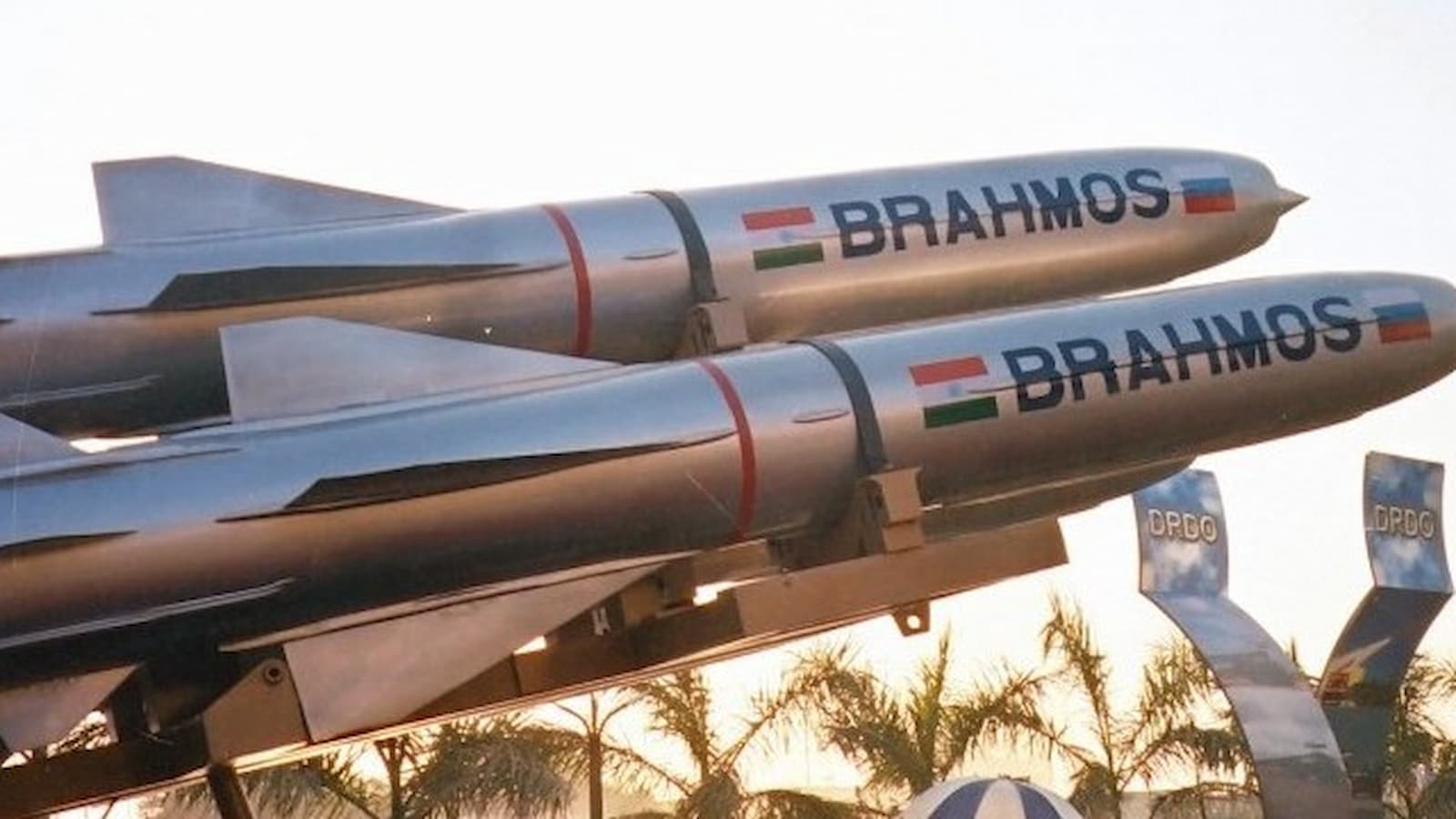
BrahMos New Missile Designs: India is pushing hard to build new and better missile systems, and BrahMos Aerospace is at the front of this big effort. Dr Jaiteerth Raghavendra Joshi, who is the chairman and managing director of the company, says the team is working on many new projects at the same time.
One of the first goals right now is to make a thinner and lighter BrahMos missile for the Indian-made TEJAS fighter jet. The TEJAS needs a smaller missile so it can carry more weapons without losing smooth flying. When this light version is ready, the jet will turn into a strong long-range striker that can hit targets on land and at sea.
DMRL Boosts AMCA Program by Delivering Critical Titanium Fin Component
New Submarine and Hypersonic Missiles
BrahMos Aerospace is also working on missile versions that can launch from submarines. They are reducing the size so the missiles fit inside torpedo tubes and vertical launch systems. India already proved this idea works when a BrahMos fired from an underwater barge in 2013, which was a huge step in building underwater strike power. The newer submarine models will still fly at supersonic speed but will work better with the limits of submarine space.
The most game-changing work is happening in the hypersonic program. These next-generation missiles will fly far faster than the current BrahMos, which reaches around Mach 2.8 to 3. The BrahMos-II is being built to hit speeds between Mach 7 and Mach 8. This speed will make the missile extremely hard to stop, reported India defence news.
The program uses DRDO’s new scramjet engine that worked for more than 1,000 seconds in ground tests in April 2025. India and Russia’s NPO Mashinostroyenia are working together on this project, just like they did for earlier BrahMos systems.
The BrahMos-II will bring many new design improvements. It will use special shapes and coatings that hide it from radar. It will also use smart flight-path changes to stay hidden while moving at hypersonic speed. India’s G3OM navigation system will help it hit targets accurately. The missile is planned to carry a 200 to 300 kilogram warhead and reach around 1,500 kilometres.
Growing need for Skilled Workers
India is facing a shortage of trained workers in the defence field. This lack of skilled people could slow down the plan to build more missiles for India and for other countries that want to buy Indian systems. Modern missile production needs many experts in different subjects, and India’s current training system may not be enough to fill all the new jobs.
IAF Set for Major Upgrade with 300 Long-Range R-37M Missiles
The state has grown into a big defence manufacturing center. It has DRDO labs, major defence companies, and many smaller industries that support aerospace and defence work.
Bharat Dynamics Limited, the main missile maker in India, also shared its plans for the future. Commodore A Madhav Rao (retired), the CMD of BDL, said the next ten years will bring heavy missile production and better export preparation. He said India needs more testing and checking centers so companies do not depend only on DRDO labs. This will help make missiles faster and match global delivery needs.
BDL is already expanding fast. It recently doubled its Akash missile output from about 50 to 100 missiles each month. The company is building new factories in Jhansi inside the Uttar Pradesh Defence Industrial Corridor and also expanding its Hyderabad unit. These sites will help produce Akash missiles and many other advanced systems. BDL has also added its own facilities for seeker building, surface-mount assembly, warhead work, and high-heat carbon composites.
