

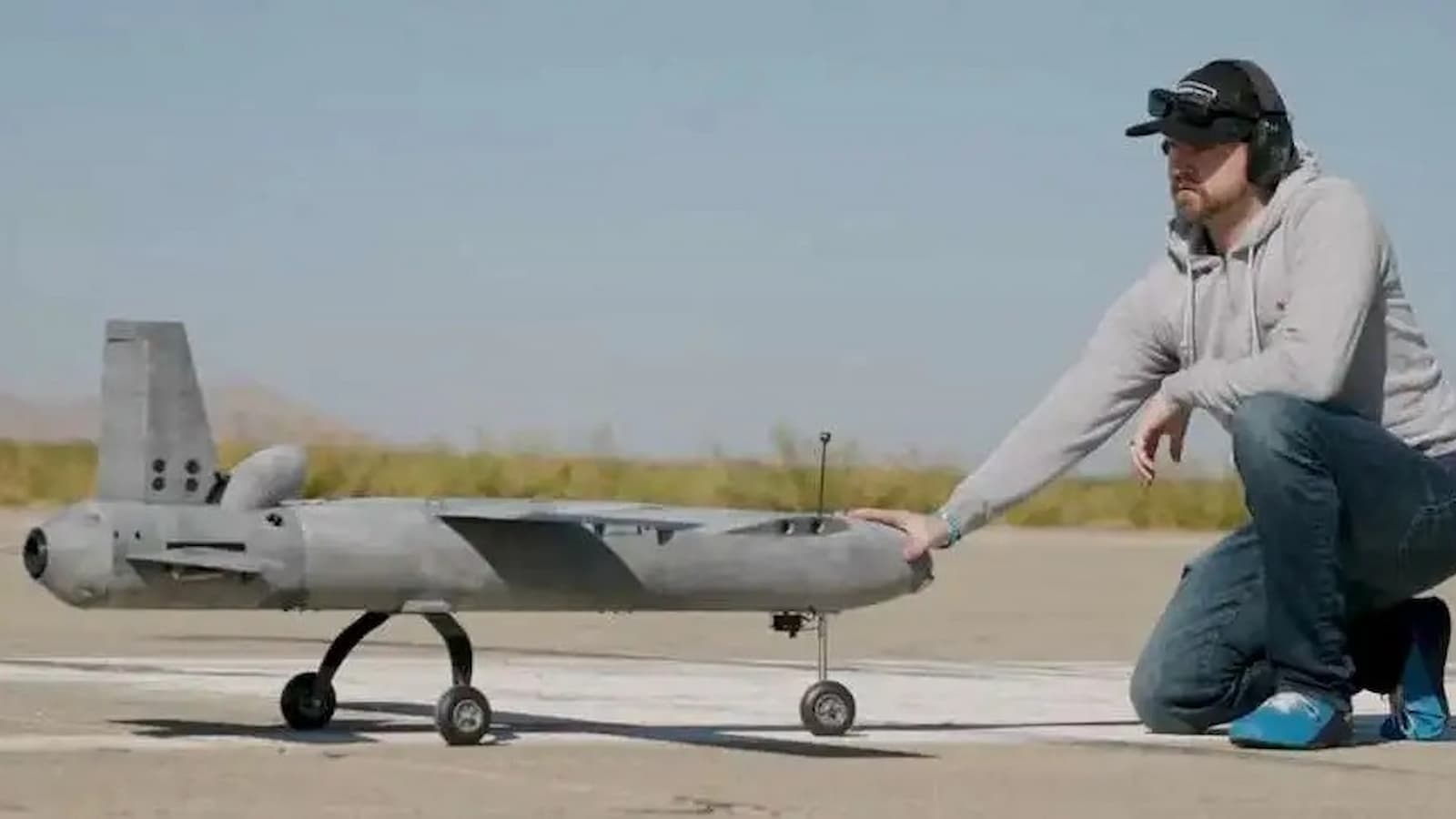
Firestorm in Military Drones: The idea behind Firestorm Labs didn’t start on a battlefield. It started at a football stadium in 2015. Dan Magy was working on robotic camera systems for sports venues when security teams kept asking him about drones. At Gillette Stadium, where the New England Patriots play, he heard the same worry again. People were flying drones over the stadium and even above team practice.
“They had people flying drones into their stadium and over their practice to probably see what Tom Brady was doing at the time,” Magy said. “It’s like when my wife asks me to do something five times, I finally listen and do it.”
That trip gave him the idea for a drone defence system. He later started Citadel Defense in 2016. The company developed Titan, an AI-based radio frequency system that could find and stop small drones. Titan was later acquired by BlueHalo in 2021, and the business eventually became part of AeroVironment after its purchase of BlueHalo.
The problem became much more serious as militant groups began using cheap drones in combat. During the fight against ISIS in Mosul, large numbers of small drones were used against American and Iraqi forces.
Tata Boeing Rolls Out 400th Apache Fuselage In Hyderabad: Major Defence Milestone
“I got to actually understand, specifically during the ISIS fight, that evil does exist in this world,” he said. “I would talk to guys who’d come back from villages in Iraq where you would have a room where they would murder everyone, a room where they’d cut everyone’s hands off, a sex slave room. It was atrocious. We think of the world we live in and how sheltered it is, and it really opened my eyes to how you are always going to, with humans, need to have some sort of defensive or offensive capability, unfortunately.”
Firestorm Takes A Different Path
Magy left Citadel and spent only about six weeks in retirement. The war in Ukraine soon pushed him back into the defence business.
He started Firestorm Labs with Ian Muceus and Chad McCoy. The plan was to make affordable drones that could be produced quickly. Muceus brought deep experience in 3D printing, while McCoy had spent more than 20 years in US special operations.
“Think about it as a drone with an API,” Magy said. “You can put a variety of sensors on it. We wanted to lower the cost of ownership for this category and get the Department of War, or whoever in the world the customer is, away from the idea that you buy one drone for one mission. We think it’s stupid. You wouldn’t buy one iPhone for each app. You buy one iPhone, you put all the apps on it.”
The company’s Tempest drone can be fitted with different payloads for jobs such as surveillance, electronic warfare and strike missions. Firestorm also developed the smaller Squall FPV drone with Croatian company Orqa. The Squall is built in the US using NDAA-compliant parts.
Taiwan Sets Up US-Backed Cyber Unit to Hunt Hidden Military Threats
The Drone Factory in A Box
Firestorm’s biggest idea is now not just the drone itself. It’s the factory that can make the drone near the battlefield.
Its xCell system uses container-sized manufacturing units with industrial 3D printers. The company says these units can make drones and spare parts close to where they’re needed. In May 2026, Firestorm received an award worth up to $30 million to expand xCell and Tempest production for US forces operating in the Indo-Pacific.
“We started getting asked by customers, could you actually take your industrial 3D printers, put them in a shipping container, and then send us all the supplies so we can build drones where we need them to be?”
The company says the system can also make parts for vehicles and other military equipment. During a recent demonstration aboard the USS Essex, Firestorm produced more than 1,000 parts and built 12 Squall drones at sea before they were used during RIMPAC 2026 in Hawaii.
Magy believes this could become a major part of future warfare. Instead of waiting days or weeks for supplies to arrive, military units could make some of the parts they need much closer to the action.
