

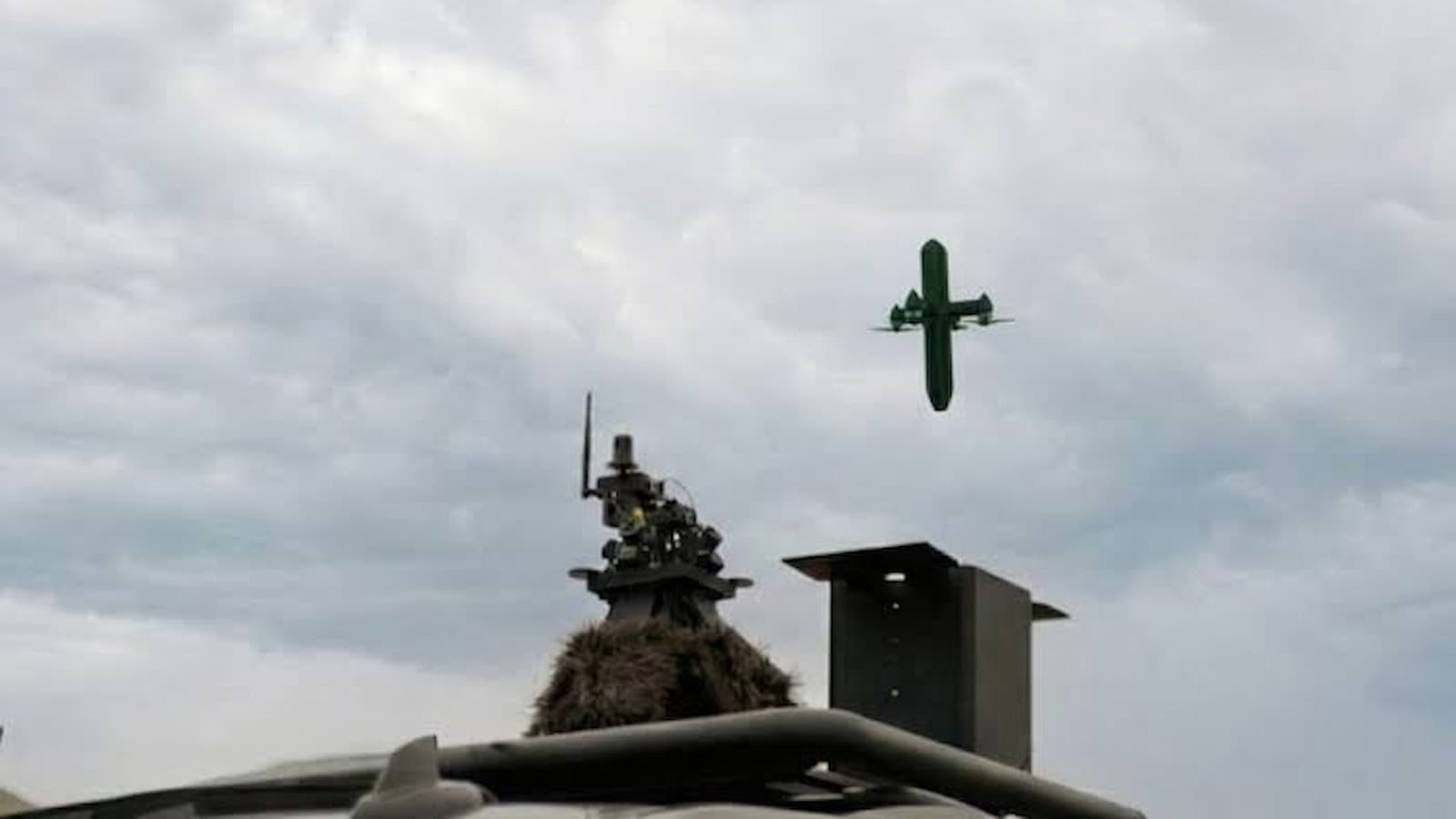
California Spike C-UAS: Small FPV drones have become a major problem in modern wars. These drones can be cheap but still cause serious damage to soldiers, vehicles and important sites. Now US defence startup Mara is working on a new system called Spike that is made to find and stop these small drones.
Spike is built around two main parts called Spotter and Seeker. The two systems can work separately or can be used together as one counter-drone setup. Mara says the system is meant to deal with the growing use of small drones and groups of drones on the battlefield.
How Mara’s Spike System works
Spotter is the part that looks for possible drone threats. It uses several types of sensors to detect and track flying objects. These include visual sensors, acoustic sensors and an optional radar.
Dutch Defence Official Calls for European-Built Ballistic Missile Interceptors
An AI system helps Spotter understand what it is seeing and locate targets during both daytime and nighttime. It is also designed to work in different weather conditions. This is important because small FPV drones can approach from different directions and may be difficult to detect with only one type of sensor.
Once a target is found, Spotter can send information to the Seeker interceptor. Seeker is a small tube-launched drone designed to chase the incoming threat. It weighs around 250 grams and can reach speeds of up to 200 km/h. It also has its own onboard intelligence to help guide it toward the target.
Built for Drone Swarms and different Locations
Mara says Spike is being designed to provide 360-degree protection against small drone threats. Its setup can be changed depending on where it’s needed. A smaller version can be carried as a rucksack system for troops. Larger versions can be placed on vehicles or used to protect bigger areas such as military bases and critical infrastructure.
The company has already tested parts of Spike in several exercises. Seeker has carried out interception tests using US Army software in Texas. Spotter has also been tested on an armoured vehicle during a US Army exercise in Europe. Mara says it also demonstrated a full engagement where Spotter detected a target and guided Seeker toward it without operator input.
Six EMB-145 Aircraft for Netra Mk1A: India’s MoD Moves Closer to Embraer Deal
In July 2026, Ukrainian forces also used Spotter about 40 km from the front line. The system was used to track multiple FPV drones. Mara has raised $7 million in new funding to move Spike from testing toward wider deployment. The company plans to provide ground-mounted systems by the end of 2026. Vehicle-mounted and man-portable versions are planned for 2027.
