
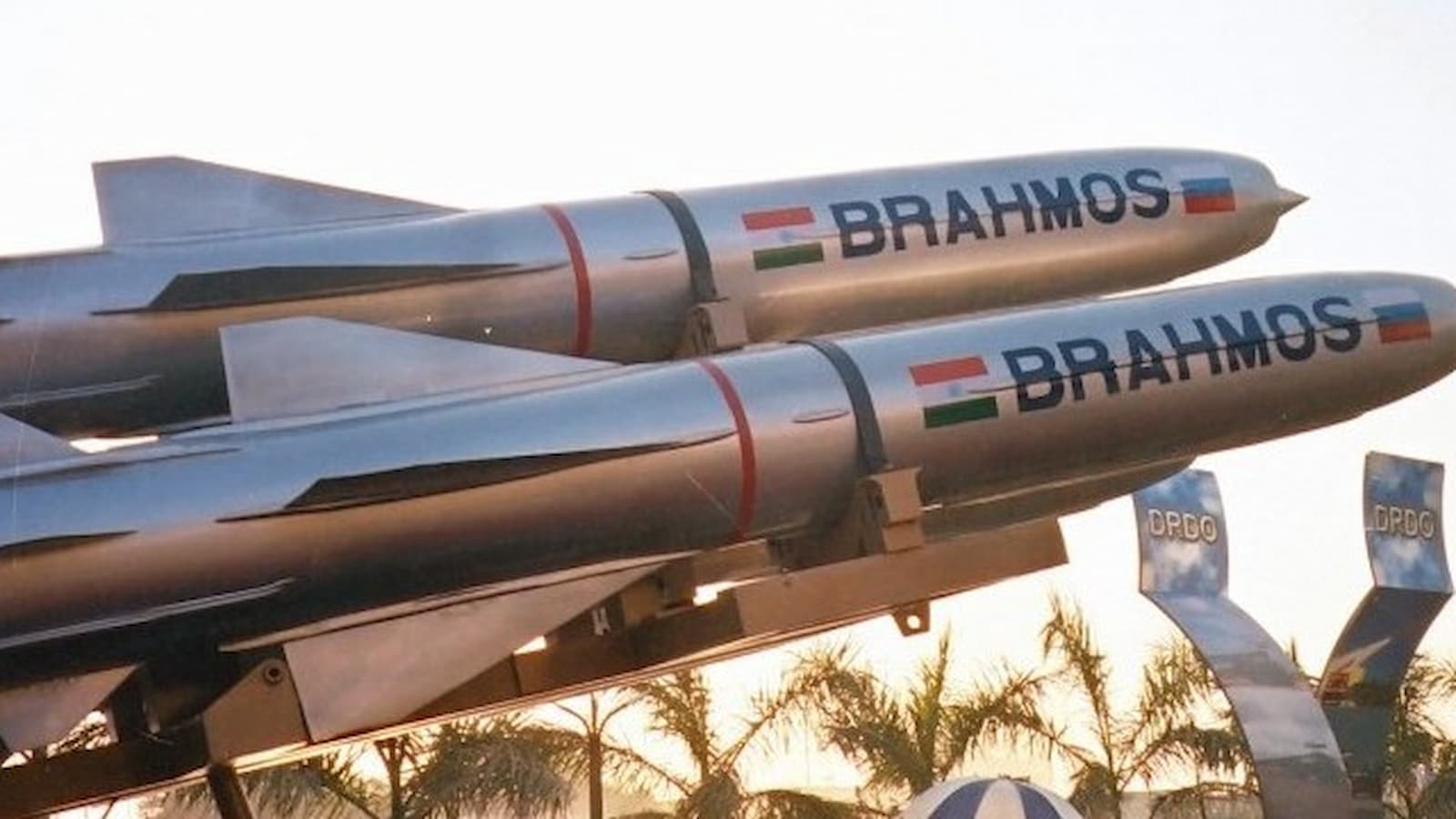
BrahMos Missiles: India is trying to control China right now in its backyard. India gave the Philippines the first group of BrahMos supersonic cruise missile weapons today because China is being mean in the South China Sea. For BrahMos, the Philippines is its first customer.
The missile transfer is a component of India’s strategy to reinforce defence ties with the Philippines in response to growing global concerns around China’s expanding military actions in the South China Sea. Vietnam and Indonesia, two countries that have maritime border issues with China, are also potential buyers of BrahMos missiles from India.
An advocate of expansion China and these nations are at odds over China’s territorial claims in the South China Sea. India seeks to deepen its defence and commercial ties with these nations to bring its opposition to Chinese maritime influence into China’s borders.
India and the Philippines decided last year to build on their defense cooperation by working together more on business and defense issues. By doing this, these countries were able to fight back against Chinese maritime sway even more closely.
Australian Military to Receive Increased Funding and Focus to transform Military
Last year, steps were taken to improve defense cooperation between the Philippines and India. These included opening a resident Defense Attaché office in Manila, making it easier for officials from different defense agencies to talk to each other, and looking into India’s offer for a concessional line of credit to buy defense equipment.
Economic Times reported that in light of the escalating maritime conflict between the Philippines and China in the South China Sea, India’s minister of external affairs, S. Jaishankar, stated last month that India firmly supports the Philippines in maintaining its national sovereignty and wants to investigate new areas of cooperation, including in defence and security. Following their encounter in Manila, Jaishankar made the following comments about Enrique Manalo, his colleague.
Taiwan, the Philippines, Vietnam, Malaysia, Brunei, and China all have counterclaims to the majority of the South China Sea that China claims. China continues to police what it deems its seas in the South China Sea with hundreds of coast guard vessels, even after the Permanent Court of Arbitration said in a 2016 Philippines case that the claim lacked legal support under international law. The US and Japan also vowed to support the Philippines as a result of the recent and regular clashes between the two sides.
India Successfully Tests Indigenous Nirbhay Cruise Missile with Manik Turbofan Engine
India has also assured Vietnam that it will receive all assistance necessary to modernize its armed forces, including the BrahMos missiles and the Akash missile defense systems. In 2022, as part of the two nations’ growing defense cooperation, India granted Vietnam 12 high-speed guard boats that were constructed under a $100 million credit line.
India has been strengthening military ties with ASEAN nations through combat drills, exchanges, training programs, and now increasingly weapon supply under the “Act East” strategy throughout the years, keeping an eye on China’s aggressive behavior in the Indo-Pacific. In line with the UN Convention on the Law of the Sea, India has likewise backed everyone’s right to free navigation and overflight in the South China Sea (UNCLOS).
India is making more and more efforts to increase its sway over the Indo-Pacific region. The Philippines’ and Indonesia’s eventual purchases of BrahMos will support India’s Act East agenda. When these nations have greater military might, the balance of power in the South China Sea, where China asserts its dominance and the US and other allied states are challenging it, changes.
