
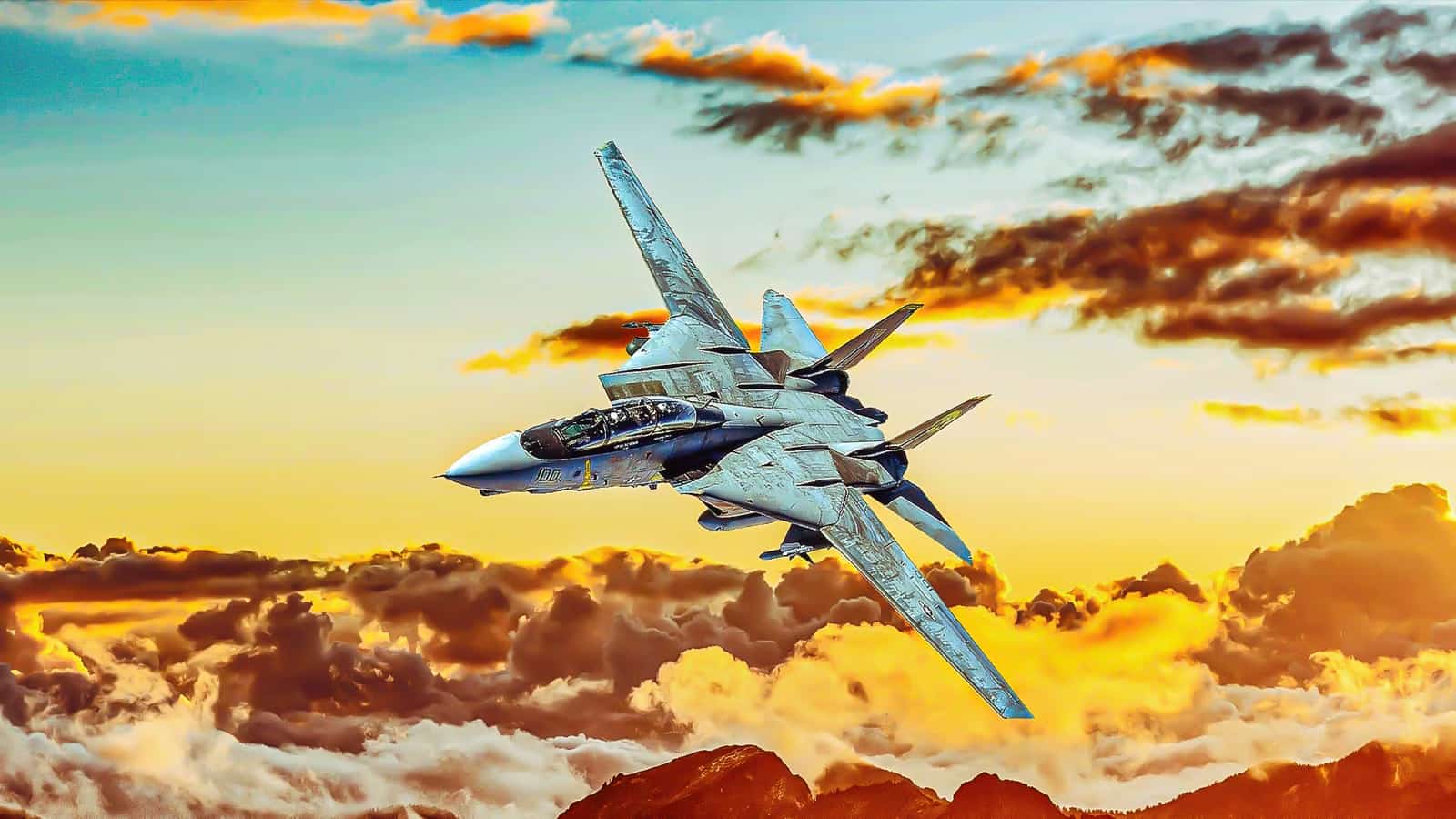
US Navy Mach 2.34 Super Tomcat-21 Fighter: The Grumman F-14 Tomcat became one of the most famous fighter jets in history. But during the 1990s, its maker had another plan to make the aircraft faster, stronger and cheaper to maintain. The project was called the Super Tomcat-21 (ST-21). Navy veteran and former SOFREP editor-in-chief Sean Spoonts has revisited the idea and explained why it never became a real aircraft.
Why Grumman Wanted to Upgrade the F-14 Tomcat
By the 1990s, keeping older F-14 Tomcats in the air had become expensive. They needed around 40 to 60 hours of maintenance for every hour of flight. Grumman wanted to improve the existing aircraft instead of making the Navy invest billions in a completely new fighter.
The company had already proposed the F-14D Quickstrike, which would give the Tomcat better ground attack abilities. The Super Tomcat-21 would take the idea further. Grumman’s argument was “Instead of the Navy sinking billions into an entirely new jet, why not let us upgrade the 700+ Tomcats already in service?”
India and US Discuss Stronger Defence Ties During Admiral Paparo’s Visit
Super Tomcat-21 Promised More Speed and Fuel
Grumman planned several major changes to improve the fighter’s performance. The proposed aircraft would use upgraded General Electric F110-GE-429 engines, producing around 60,000 pounds of thrust in total, according to the proposal described by Spoonts. It was expected to reach Mach 1.1 without using afterburners, a feature known as supercruise, while its top speed was listed at Mach 2.34. These were proposed capabilities, not results from a flying ST-21.
The design also included larger wing-root sections to carry around 4,400 pounds of extra fuel. Its bring-back weight, which is the amount of weight an aircraft can carry when returning to an aircraft carrier, was planned to increase from 16,000 to 18,000 pounds. This would help pilots return with more fuel and unused weapons instead of dumping fuel before landing.
New wing edges and improved Fowler flaps were expected to reduce landing speed by around 15 mph. A digital flight control system and a single-piece canopy would also improve aircraft control and visibility for the pilot and the radar intercept officer.
Why the Navy Chose the Super Hornet Instead
The ST-21 could have worked as both a strike fighter and a long-range interceptor. Ground crews would be able to change its equipment depending on the mission. For ground attacks, some targeting equipment could be removed to save weight for bombs and fuel. For carrier defence, crews could fit drop tanks and remove unnecessary strike equipment.
HAL Delivers 2,000th Aero-Engine As Shakti Production Gets Major Boost
The original F-14 was built to stop Soviet bombers before they could launch missiles at American aircraft carriers. Its Phoenix missiles had a reported range of around 100 to 120 miles. Four Tomcats carrying six missiles each could launch 24 missiles against approaching bombers.
But the Soviet Union collapsed and the threat that had shaped the Tomcat’s main mission became less pressing. The Navy instead chose the F/A-18E/F Super Hornet, which could handle fighter missions, ground attacks and electronic warfare. It also offered a more affordable way to replace ageing aircraft.
