

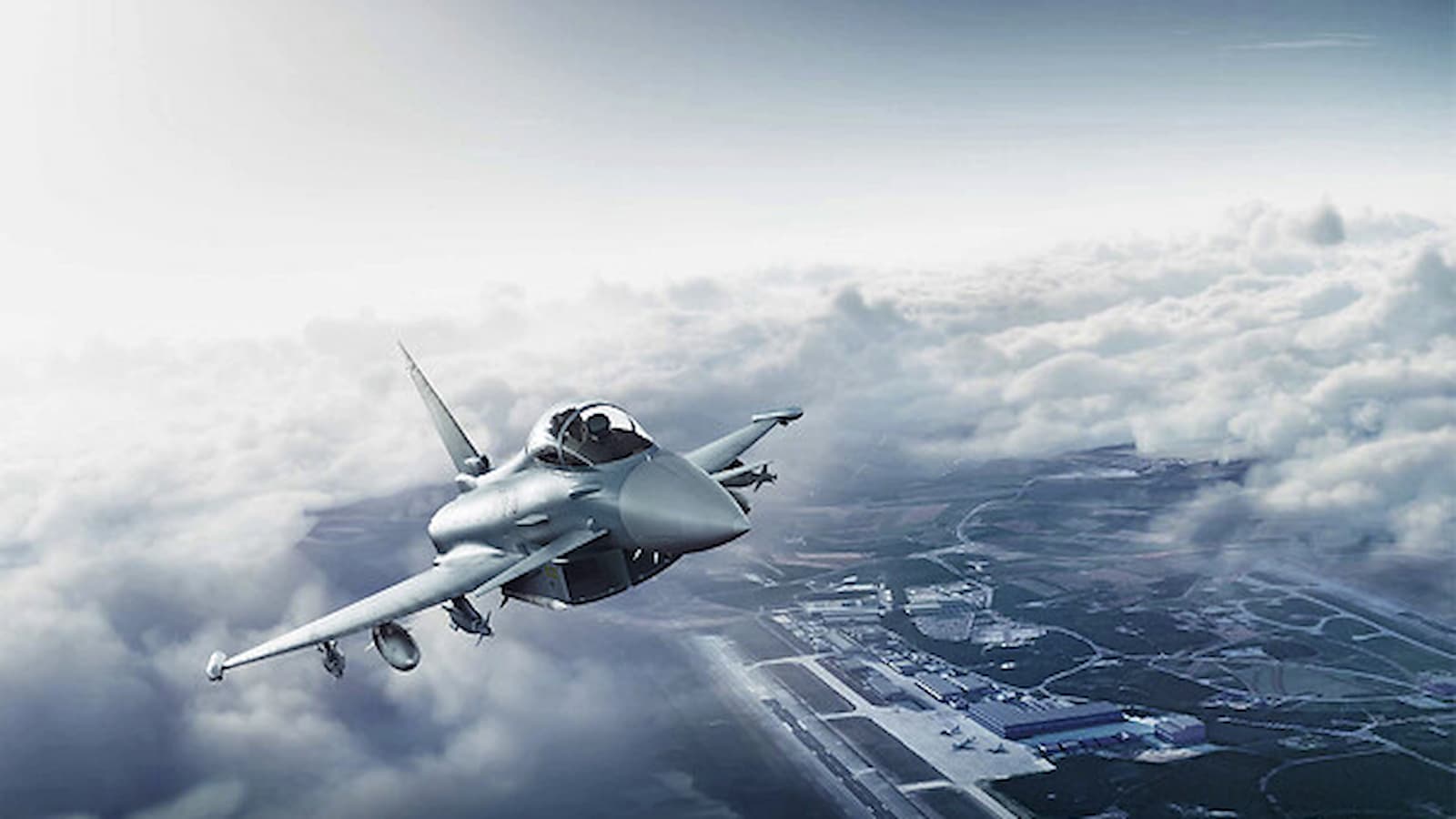
US Military AI Jet: In a significant move toward incorporating artificial intelligence into military operations, the US Air Force just finished the first formal test flight of a fighter aircraft piloted by an AI system. Exclusively available to a small group of media, the spectacular presentation showcased the Air Force’s dedication to leading the way in using AI-enabled systems in aerial defense.
Even thus early, in September 2023, the AI had just about two dozen actual flights under its belt, but it showed to be a fast student. Secretary of the Air Force Frank Kendall, who rode shotgun on the test flight and was fully aware that the AI-controlled aircraft was outclassing any human pilot, claimed it already outmatched some of the most experienced human fighter pilots.
US Military AI Jet: AI outperforming humans
A fictional combat scenario involving an AI-controlled fighter taking against an F-16 with a human pilot centered the one-hour test. Though the AI outmanoeuvred the human pilot, both planes executed movements to gain an edge.
This cutting-edge learning approach allows the AI in the Air Force’s system to experiment with various approaches and techniques in the sim while learning fundamental moves. Data from real flight tests is then included into the simulator so that the AI can continuously hone its abilities through an iterative learning loop.
India’s Growing Aviation Sector Sets Stage for Development of 72-Seater Aircraft
Another justification for the Air Force’s eventual decision to rely on AI rather than actual personnel is financial savings. Future aircraft will be smaller and less expensive as the Air Force must closely monitor its spending after some significant outlays.
According to Cryptopolitan, this will become feasible if the aircraft design no longer needs to consider the pilot. In such scenario, the first unidentified AI aircraft is not anticipated to be launched until 2028, with a 1,000 ready for deployment target. Similar development is eagerly anticipated in China.
Kendall defended these very high goals by arguing that security is jeopardized by excluding AI technology. The Red Cross is one of the humanitarian organizations that has expressed worries that AI systems may make judgments about the use of weapons on their own.
Indian Air Force and Navy incorporate Rampage missiles into fighter aircraft fleet
Claiming that human operators would constantly watch and oversee the AI system anytime a weapon was deployed, Kendall further allayed the concerns. Beyond the technological advantages, the Air Force is also adopting AI-controlled aircraft as a further move in the direction of a more frugal strategy. With the recent high expenditures posing fiscal issues, the Air Force wants to build smaller, less expensive aircraft by eliminating the need for human pilots in the production model.
Exploring affordable, state-of-the-art solutions for national security, the US Air Force, by taking a bold step, furthered its commitment to maintaining a strategic advantage in a world racing to unleash AI in the military domain.
